

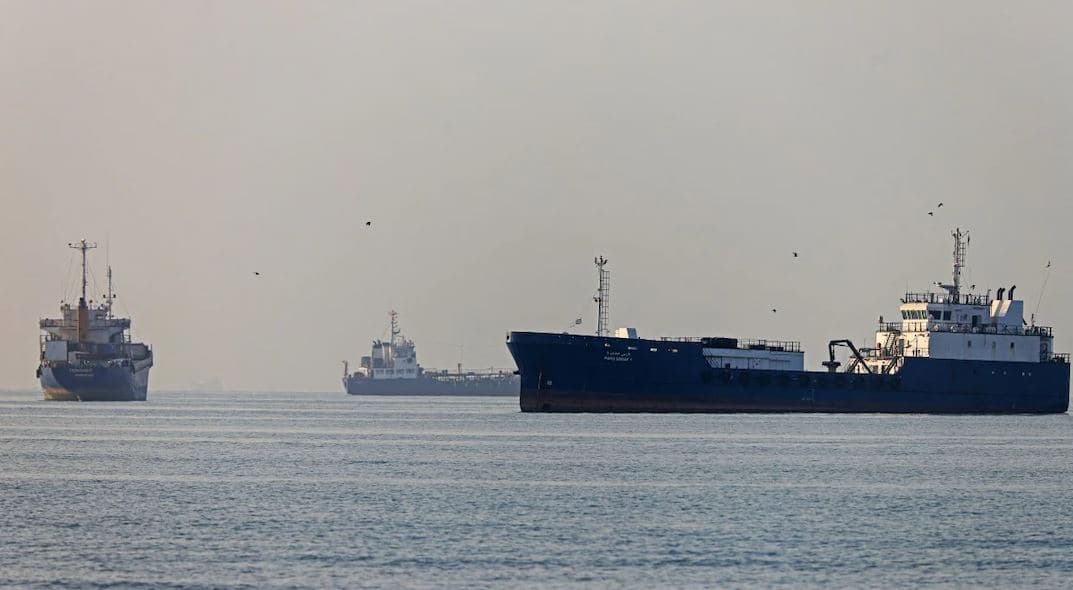
The fragile truce between Washington and Tehran cracked open again this week. After Iran struck three commercial tankers moving through the Strait of Hormuz, the United States launched a wave of retaliatory airstrikes. Iran answered by hitting American military positions in the Gulf. What looked like a contained skirmish a day earlier is now a test of whether the June ceasefire can survive the summer.
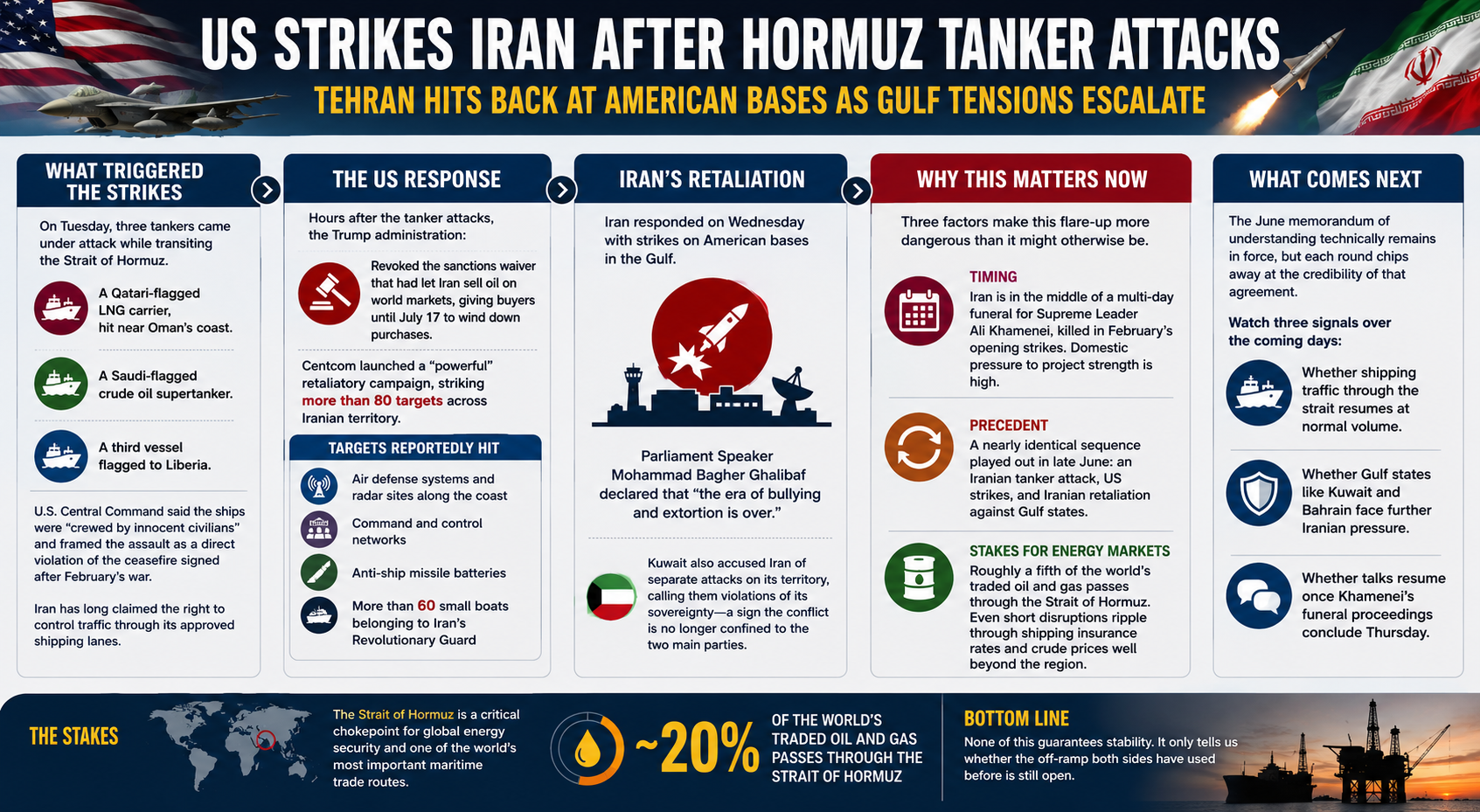
What Triggered the Strikes
On Tuesday, three tankers came under attack while transiting the strait:
- A Qatari-flagged LNG carrier, hit near Oman's coast.
- A Saudi-flagged crude oil supertanker.
- A third vessel flagged to Liberia.
U.S. Central Command said the ships were "crewed by innocent civilians" and framed the assault as a direct violation of the ceasefire signed after February's war. Iran has long claimed the right to control traffic through its approved shipping lanes and has hinted that vessels ignoring its warnings would face consequences.
The US Response
Hours after the tanker attacks, the Trump administration revoked the sanctions waiver that had let Iran sell oil on world markets, giving buyers until July 17 to wind down purchases. Centcom then launched what it called a "powerful" retaliatory campaign, striking more than 80 targets across Iranian territory.
Targets Reportedly Hit
- Air defense systems and radar sites along the coast.
- Command and control networks.
- Anti-ship missile batteries.
- More than 60 small boats belonging to Iran's Revolutionary Guard.
The strikes came while President Trump was in Ankara for a NATO summit, an odd backdrop for a decision with immediate regional consequences.
Iran's Retaliation
Iran responded on Wednesday with strikes on American bases in the Gulf. Parliament Speaker Mohammad Bagher Ghalibaf declared that "the era of bullying and extortion is over." Kuwait also accused Iran of separate attacks on its territory, calling them violations of its sovereignty, a sign the conflict is no longer confined to the two main parties.
Why This Matters Now
Three factors make this flare-up more dangerous than it might otherwise be.
Timing. Iran is in the middle of a multi-day funeral for Supreme Leader Ali Khamenei, killed in February's opening strikes. Domestic pressure to project strength is high, and any government facing that kind of moment is less likely to back down quietly.
Precedent. A nearly identical sequence played out in late June: an Iranian tanker attack, US strikes, and Iranian retaliation against Gulf states. Repetition suggests neither side has found a way to break the cycle rather than simply pause it.
Stakes for energy markets. Roughly a fifth of the world's traded oil and gas passes through the Strait of Hormuz. Even short disruptions ripple through shipping insurance rates and crude prices well beyond the region.
What Comes Next
The June memorandum of understanding technically remains in force, and both governments have stood down after previous exchanges. But each round chips away at the credibility of that agreement. Watch three signals over the coming days:
- Whether shipping traffic through the strait resumes at normal volume.
- Whether Gulf states like Kuwait and Bahrain face further Iranian pressure.
- Whether talks resume once Khamenei's funeral proceedings conclude Thursday.
None of that guarantees stability. It only tells us whether the off-ramp both sides have used before is still open.