

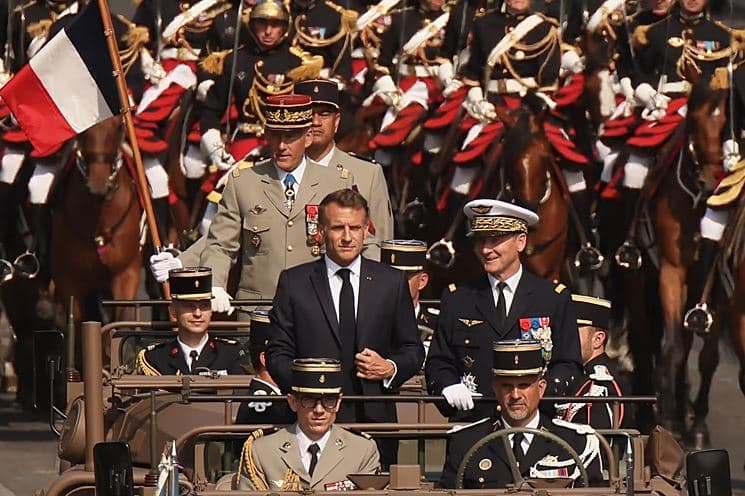
Paris marked July 14, 2026 with a Bastille Day parade that carried a message far beyond French borders. This year's Champs-Elysees procession became a visible statement of European military coordination, built around continued backing for Ukraine and a growing willingness among European states to act as a unified security bloc.
As someone who has tracked NATO expansion, European rearmament, and coalition warfare for nearly two decades, I see this parade as more than tradition. It is a data point in a broader shift: Europe is beginning to organize its defense posture around collective deterrence rather than isolated national programs.
A Parade Built Around European Unity
France's National Day parade has always centered on French military pride. This year, the format changed. Troops, aircraft, and equipment from across Europe joined French forces on the Champs-Elysees, turning a domestic celebration into a continental show of force.
Record Troop Numbers Signal Strategic Shift
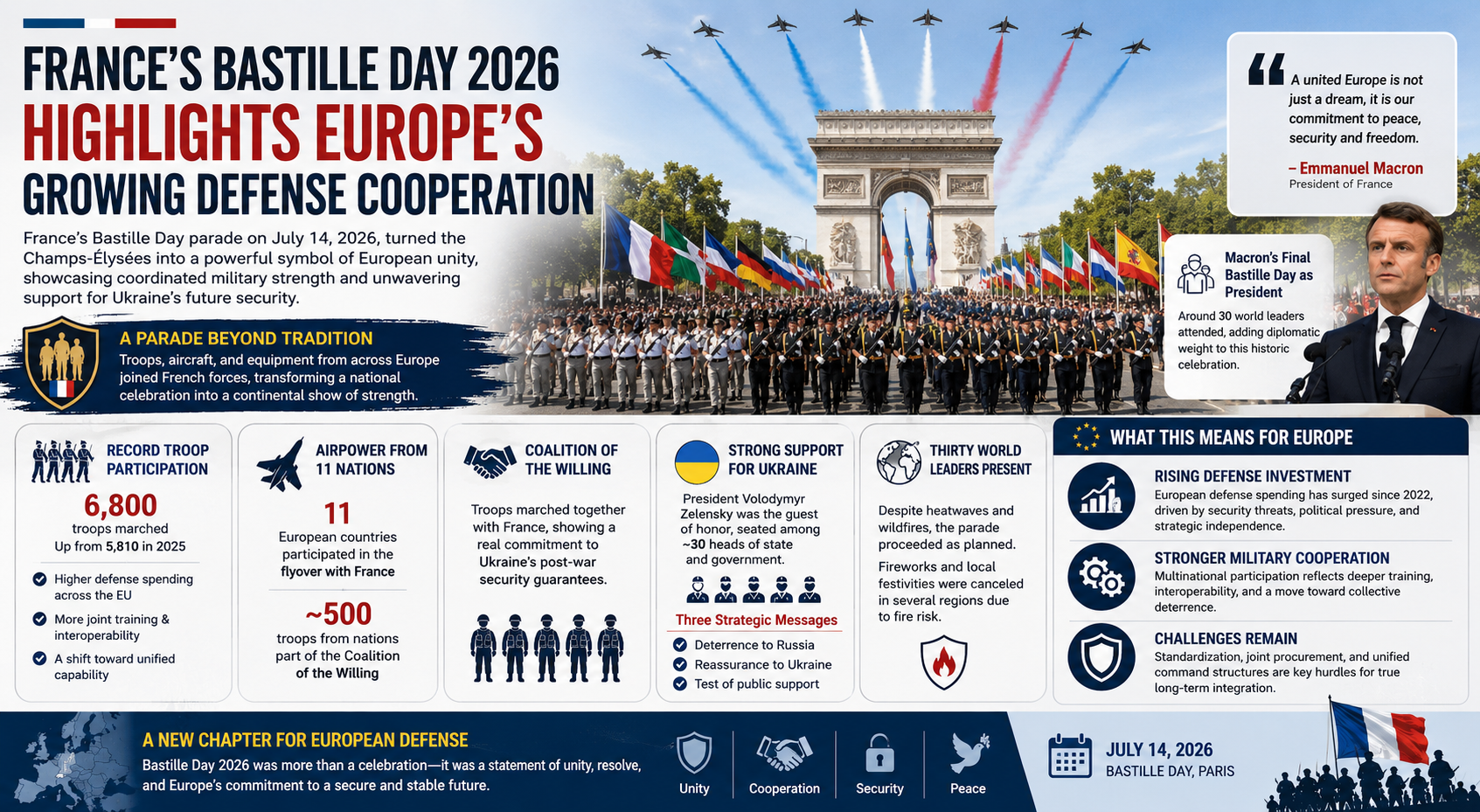
The marching parade included 6,800 troops, up from 5,810 in 2025. That increase is not incidental. It reflects:
- Higher defense spending commitments across EU member states.
- Expanded joint training and interoperability exercises.
- A political decision to present unified capability rather than isolated strength.
Aircraft From 11 Nations Fly Over Paris
Warplanes from 11 European countries took part in the flyover, alongside roughly 500 troops from nations tied to the Coalition of the Willing, a grouping formed to support Ukraine's post-war security guarantees. Multinational flyovers of this scale are rare outside formal NATO exercises, which makes the choice to stage one during a national holiday significant.
Coalition of the Willing Takes Center Stage
The Coalition of the Willing has moved from diplomatic concept to operational reality. Its troops marching alongside French forces signals that member states are prepared to commit personnel, not just funding or equipment, to Ukraine's long-term security architecture.
Support for Ukraine's Post-War Security
Ukrainian President Volodymyr Zelensky attended the parade as a guest of honor, seated among roughly 30 heads of state and government. His presence underscored the parade's dual purpose: honoring French history while projecting resolve toward Moscow and reassurance toward Kyiv.
From a strategic standpoint, this kind of public alignment serves three functions:
- It signals deterrence to Russia by demonstrating coordinated military readiness.
- It reassures Ukraine that European support extends beyond the current conflict phase.
- It tests European publics' appetite for sustained defense commitments.
Macron's Final Bastille Day as President
This parade also marked President Emmanuel Macron's last Bastille Day in office. Hosting around 30 world leaders for the occasion gave the event added diplomatic weight, positioning France as a convener of European security policy at a moment of political transition.
Thirty World Leaders in Attendance
The scale of foreign attendance, paired with the heatwave and wildfire conditions affecting parts of France this year, did not diminish the event's core message. Authorities canceled fireworks and local celebrations in several regions due to fire risk, yet the military parade proceeded as planned, reinforcing its priority status within the national calendar.
What This Means for European Defense Policy
The parade is a symbol, but symbols in defense policy tend to follow substance. Several underlying trends explain why Europe chose this moment to display unity so visibly.
Rising Defense Budgets Across the Continent
European defense spending has climbed steadily since 2022, driven by:
- Sustained Russian military activity near NATO's eastern border.
- Uncertainty over long-term US security guarantees.
- Domestic political pressure to reduce dependence on any single ally.
Higher troop counts and multinational flyovers reflect real budget increases translating into visible capability, not just rhetoric.
Challenges Ahead for Collective Security
Coordination among 11 or more air forces, plus ground troops from multiple nations, requires standardized equipment, shared logistics, and consistent command structures. These remain unresolved issues across much of Europe. Analysts should watch whether this parade-level cooperation translates into deeper structural integration, such as joint procurement or a unified rapid-reaction force, or whether it remains a largely symbolic display tied to specific political moments like Ukraine's post-war planning.