

What Triggered the Hezbollah Escalation in March 2026
Who Gave Hezbollah the Order to Strike and Why
On March 2, 2026, Hezbollah's secretary-general Naim Qassem formally announced the group's intention to retaliate following Iran's confirmation that Supreme Leader Ali Khamenei had been killed in Israeli strikes on Tehran. Qassem stated the group would not leave what he called the field of honor and resistance. This declaration ended a fragile ceasefire brokered in late November 2024 between Israel and Lebanon, under which Hezbollah had been pushed north of the Litani River and Israeli forces had withdrawn from most of southern Lebanon by February 2025.
The causal chain here is critical to understand. The United States and Israel launched Operations Roaring Lion and Epic Fury on February 28, 2026, targeting Iranian nuclear infrastructure, ballistic missile production, and senior regime leadership. That campaign killed Khamenei, Iran's defense minister, and multiple IRGC generals. For Hezbollah, a proxy force ideologically and structurally bound to the Islamic Republic since 1982, the death of the Supreme Leader was not merely a military development. It was an existential signal demanding a response.
What Hezbollah Fired and Where
The initial Hezbollah salvo on March 2 involved multiple projectiles targeting a missile defense site south of Haifa. The IDF confirmed intercepting one projectile originating from Lebanese territory while reporting that additional munitions fell in open areas. This was the first time Hezbollah had launched projectiles toward Israel since the November 2024 ceasefire. Within hours, the militia escalated to firing missiles and rockets across northern Israel, followed by a drone assault targeting three specific Israeli military installations: Ramat David Airbase, the Meron monitoring base, and Camp Yitzhak.
These were not symbolic acts of defiance. Targeting surveillance infrastructure such as the Meron base and an active airbase demonstrates a residual but meaningful operational capability, even after Hezbollah suffered catastrophic leadership and material losses through 2024 and into early 2025.
Who Was Killed in the Israeli Strikes on Beirut
How Israel Responded and What It Targeted
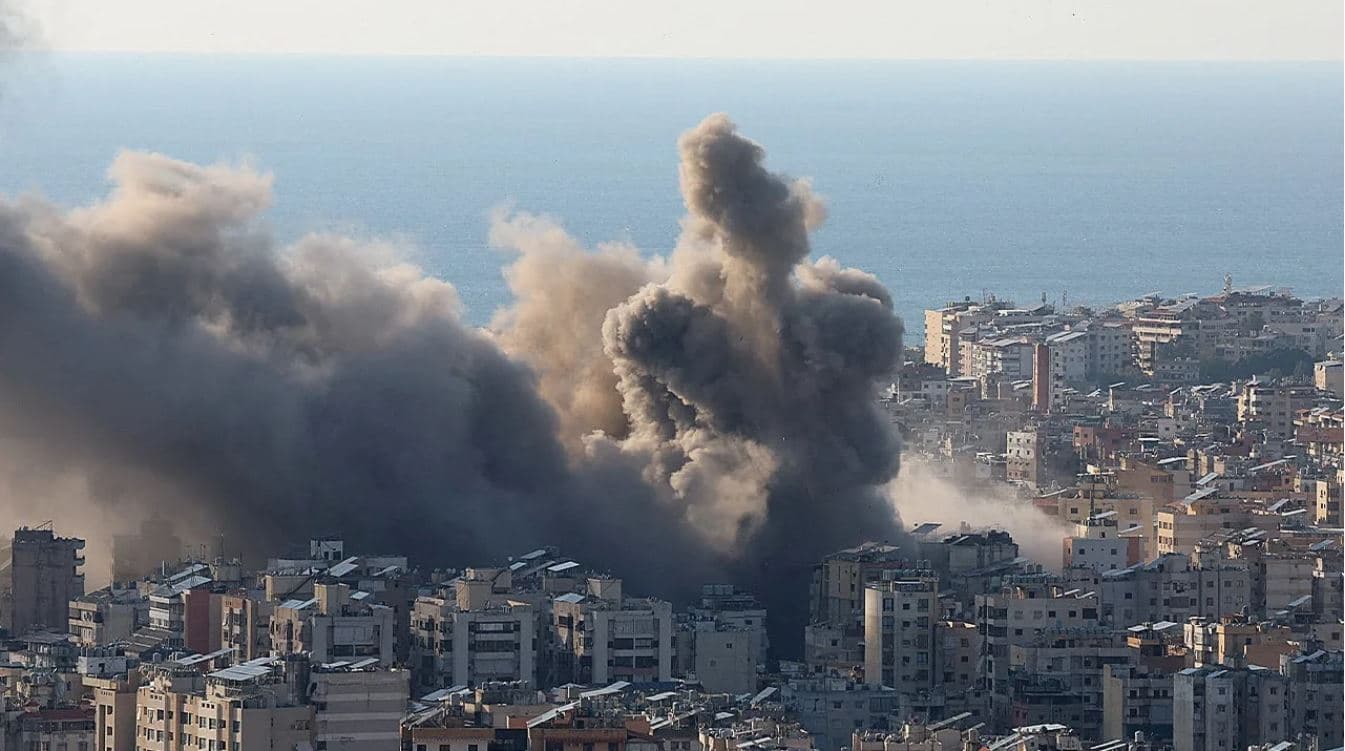
Israel's response was immediate, overwhelming, and strategically layered. Israeli jets struck the Lebanese capital of Beirut at 3 a.m. local time on March 2, issuing evacuation orders to civilians in 50 villages across southern Lebanon before initiating the campaign. The IDF described its strikes as precise and targeted, stating they hit senior terrorist elements of the Hezbollah terrorist organization in the Beirut area.
Confirmed kills included Hussain Makled, Hezbollah's intelligence chief, whose elimination is among the most significant decapitation strikes Israel has executed against the group's command layer since the 2024 campaign. The IDF also eliminated Zaid Ali Jumaa, identified as a senior figure overseeing Hezbollah's rocket and drone operations, in a separate Beirut strike.
What the Ramada Hotel Strike Revealed About Iranian Command Presence
Among the most strategically revealing strikes of this period was the Israeli airstrike on the Ramada hotel building in central Beirut. The IDF confirmed killing five senior Iranian commanders from the Quds Force of the Islamic Revolutionary Guard Corps, specifically from what the IDF designated the Lebanon Corps of the Quds Force. These were not support staff. They were senior military advisers actively shaping Hezbollah's operational planning and readiness, which the IDF stated included planning terror attacks on Israel.
The presence of Quds Force senior commanders embedded inside a civilian hotel in central Beirut underscores a structural reality that Western analysts have long documented. Iran does not simply fund and arm Hezbollah. It commands it. The death of these officers is a direct degradation of Iranian operational reach in the Levant.
Who Were the Other Casualties and What Did Lebanon Confirm
Lebanon's Health Ministry confirmed that Israeli strikes killed 123 people and wounded more than 600 others from the start of the war through March 6, 2026. Among those killed in strikes on the eastern Lebanese town of Nabi Chit were over 41 people, including at least three Lebanese Armed Forces soldiers and one member of Lebanon's General Security Directorate. The UN High Commissioner for Human Rights Volker Turk called for an immediate cessation of hostilities. Lebanese officials confirmed more than 517,000 people had been displaced within Lebanon since the conflict reignited.
Where the Conflict Stands Geopolitically and What the Power Dynamics Reveal
Why Lebanon's Government Banned Hezbollah's Military Activities
The Lebanese government's response to the Hezbollah strikes on Israel was historically unprecedented. Beirut's Council of Ministers announced a ban on all Hezbollah military and security activities and called for the group to surrender its weapons. Justice Minister Adel Nassar formally requested the public prosecutor to assign security forces to arrest those responsible for launching rockets from southern Lebanon into Israel.
The new Lebanese government, working with international partners since 2025 to assert sovereignty over the country's security landscape, has explicitly distanced itself from Hezbollah's adventurism. Analysts from RAND and the Israel Policy Forum noted that Israel's strikes were deliberately calibrated to avoid targeting Lebanese state infrastructure, precisely to preserve its nascent relationship with Beirut. Shira Efron of RAND described Israeli thinking as coming in to clear what remains of Hezbollah, which would help boost the Lebanese government's strength.
Who Is Losing Political Support Inside Lebanon
Hezbollah's political standing among Lebanon's Shia community, its traditional base, has visibly eroded. By March 5, 2026, the Lebanese government announced it would arrest and repatriate anyone in Lebanon connected to Iran's Revolutionary Guards, triggering the departure of dozens of Iranian officers from Beirut within 48 hours. The majority of those departing were Quds Force members who had been serving as military advisers to Hezbollah.
What the Broader Regional Architecture Looks Like
This conflict cannot be read in isolation from the simultaneous U.S.-Israeli war against Iran. Iran had been firing ballistic missiles and drone swarms at Israel, U.S. military bases in the Gulf, and Arab states including Kuwait, Saudi Arabia, Bahrain, Qatar, the UAE, Oman, Jordan, and Azerbaijan. U.S. Defense Secretary Hegseth stated that Iran's ballistic missile launch rate fell 90 percent from day one of the war, with drone launch rates falling by a comparable margin. These figures reflect an Iran that is functionally running out of first-tier strike capacity.
Gulf Arab states publicly warned Tehran of retaliation. Syria's presidency voiced support for Hezbollah disarmament and the Syrian army mobilized along the Lebanese border. The UK House of Commons Library briefing published on March 11, 2026, noted that many of Iran's regional allies have been significantly weakened, primarily by Israeli military action since 2023.
What This Means for the Future of Hezbollah and Iranian Proxy Strategy
How Severely Has Hezbollah Been Degraded
Through 2024, Israel eliminated Hezbollah's historic secretary-general Hassan Nasrallah, his successor Hashem Safieddine, and chief of staff Haytham Ali Tabatabai. The September 2024 pager and walkie-talkie device explosions removed approximately 1,500 fighters from active duty. The 2024 ground invasion degraded southern Lebanon infrastructure and exposed command networks. By early 2026, Naim Qassem was leading an organization that retained firepower but had lost its most experienced leadership cadre, its strategic depth in the south, and the Iranian handlers who are now being killed in hotel buildings and compelled to flee Beirut.
Who Stands to Gain from This Conflict
In the short term, Israel gains the most from this round of escalation. Each Hezbollah strike provides legal and political cover for further degradation of the group's remaining military assets and Iranian advisory networks embedded in Lebanon. Lebanon also stands to gain in the longer arc if the Lebanese state's authority over Hezbollah is consolidated. The banning of Hezbollah military activities, the arrests, and the expulsion of IRGC officers are the most assertive acts of Lebanese sovereignty over the group in the organization's 44-year history.
What Happens if Hezbollah Crosses Israel's Red Lines
Retired IDF Major General Amos Yadlin identified the red lines as Hezbollah attacks on Israeli power infrastructure or strikes that produce large numbers of Israeli civilian casualties. Crossing either threshold would likely shift Israel's targeting calculus to include Lebanese state infrastructure, ending the current strategic distinction between Hezbollah and the Lebanese government. Rachel Brandenberg of the Israel Policy Forum noted that a U.S.-mediated deconfliction channel between Israel and Lebanon had been active until recently, and that proposals for a special economic zone in southern Lebanon were on the table just weeks before this escalation. That prospect recedes with every rocket fired.
Why This Escalation Matters for Global Security
What the Strait of Hormuz Situation Means for Energy Markets
Iran has attacked shipping through the Strait of Hormuz, the narrow passage through which approximately one-fifth of all globally traded oil passes. Global oil prices rose nearly 20 percent in the week ending March 6, 2026, reaching approximately 80 dollars per barrel. The U.S. Treasury issued a 30-day waiver allowing Indian refineries to purchase stranded Russian oil, reflecting Washington's concern about energy supply disruption cascading into a broader economic shock.
How International Actors Are Positioning
The United Kingdom, France, and Germany issued a joint statement on February 28, 2026, condemning Iranian counter-strikes and calling for resumed diplomacy. UK Prime Minister Keir Starmer authorized the use of UK military bases at Diego Garcia and RAF Fairford for a specific and limited defensive purpose, to destroy Iranian missiles at their launch source. The RAF base on Cyprus was subsequently struck by an Iranian drone. Turkey pursued a return to negotiations on Iran through back channels with France.