

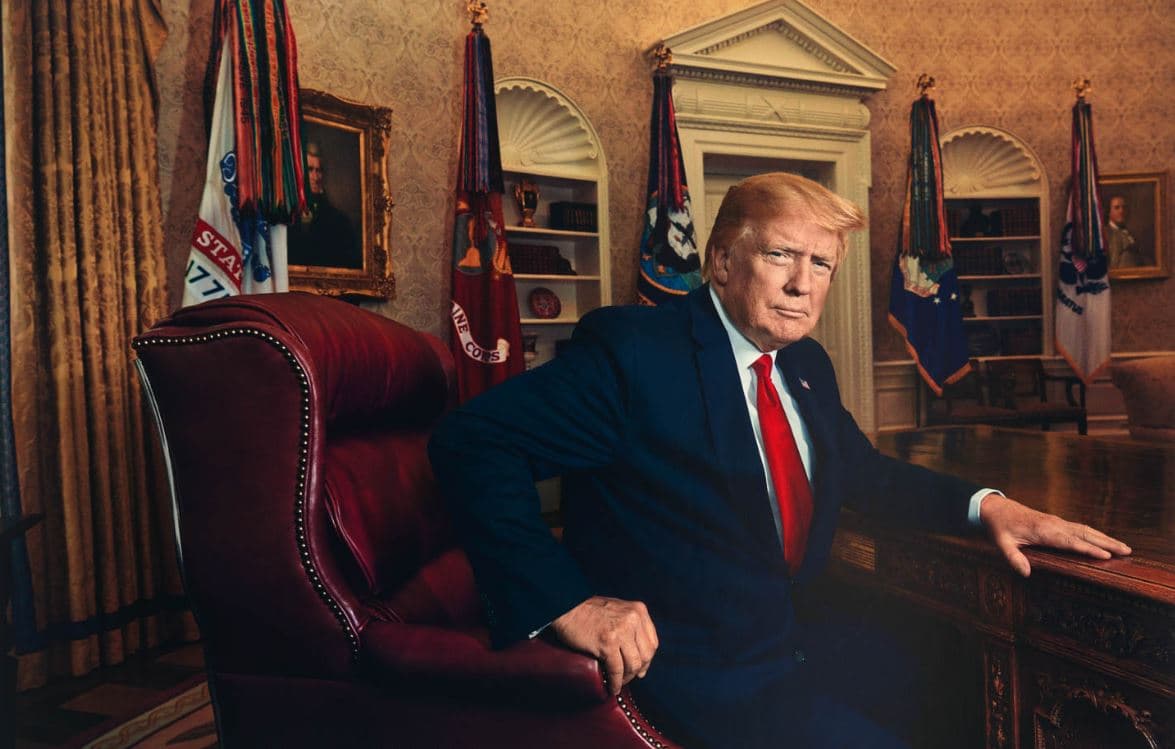
Donald Trump was born on June 14, 1946, in New York. He is a former real estate mogul and reality TV star who has served as both the 45th and 47th president of the United States. The scion of renowned New York real estate developer Fred Trump, Donald rose to eclipse his father in fame and fortune, moving through New York's elite social circles in the 1980s to American TV fame in the 2000s, and finally leveraging his name and wealth to become one of the most consequential leaders of the early 21st century.
What political leaders have said about Donald Trump across the arc of his life is the story of American power itself. The assessments have ranged from admiration to alarm, from bipartisan praise to historic condemnation. This article traces that record from his Queens childhood to the Iran War of 2026.
Early Life, Education, and the Business Empire
Born Into Real Estate, Destined to Exceed It
A graduate of the University of Pennsylvania's Wharton School of Finance, Trump followed in his father's footsteps into the world of real estate development, making his mark in New York City. The Trump name soon became synonymous with the most prestigious of addresses in Manhattan and, subsequently, throughout the world.
Throughout his life, Trump has continually set the standards of business and entrepreneurial excellence, especially in real estate, sports, and entertainment.
His earliest political admirers were largely New York Democrats. In the 1970s and 1980s, Trump cultivated relationships with figures including Roy Cohn, the infamous political fixer who had worked for Senator Joseph McCarthy. New York Mayor Ed Koch praised Trump's early development work in Midtown Manhattan, crediting him with catalysing the revitalisation of the Grand Hyatt Hotel site and later the West Side rail yards. At that stage, Trump was a donor to Democratic candidates including Jimmy Carter and Ted Kennedy, and was viewed by many New York political insiders as a pragmatic deal-maker rather than an ideological actor.
The Atlantic City Years and the First Political Assessments
By the late 1980s, Trump had expanded into Atlantic City casinos, NFL team ownership bids, and national media celebrity. His political profile grew accordingly. In 1987, he took out full-page newspaper advertisements attacking US foreign policy and NATO burden-sharing, writing that the US was being ripped off. It was a political position that foreshadowed his presidency by three decades.
New Jersey Governor Tom Kean expressed frustration with Trump's aggressive casino tactics. Senate Democrats began noting Trump's growing influence on New York's political fundraising landscape. The assessments at this stage were transactional. Trump was viewed as a powerful local operator whose political views were secondary to his financial leverage.
The Bankruptcies, the Brand, and the Bipartisan Backlash
Trump's Atlantic City casino empire collapsed through a series of bankruptcies in the 1990s. Political leaders at the time were largely restrained in public comment, but the private assessments were sharply negative. Senator Frank Lautenberg of New Jersey expressed concern about the economic fallout on Atlantic City's workers. Democratic Mayor of Atlantic City James Usry criticised Trump's management of casino properties he believed had drained local economic value without adequate reinvestment.
The bankruptcies did not end Trump's public career. They accelerated his pivot to brand licensing and, eventually, television. His political comments during this era remained pointed. He criticised NAFTA in terms nearly identical to those he would use as president twenty years later.
The Political Emergence: From Reform Party Flirtation to The Apprentice
2000: The First Presidential Flirtation
Trump has officially run as a candidate for president four times, in 2000, 2016, 2020, and 2024. He also unofficially campaigned in 2012 and considered a run in 2004.
His 2000 Reform Party candidacy was brief but politically revealing. Pat Buchanan, his rival for the Reform Party nomination, dismissed Trump as a dilettante who treated the political process as a publicity vehicle. Jesse Ventura, then Governor of Minnesota and a Reform Party figure, expressed more ambivalent views, describing Trump as someone who understood the anti-establishment mood but lacked the political discipline to convert it into a campaign.
The Apprentice Era: Fame as Political Capital
NBC's The Apprentice, which debuted in 2004, transformed Trump from a New York tabloid figure into a national brand. Political leaders assessments shifted accordingly. He was invited to the White House Correspondents Dinner. He met with Republican and Democratic governors seeking business investment. Senator Hillary Clinton attended his 2005 wedding to Melania Knauss. The political class of both parties treated Trump during this period as a wealthy celebrity whose views were entertaining rather than threatening.
The Obama Correspondents Dinner of 2011 proved to be a turning point. President Obama publicly mocked Trump in front of the assembled Washington political press corps, making sustained jokes about Trump's Apprentice decisions and his promotion of the birther conspiracy. Those present noted that Trump, seated in the audience, did not laugh. Multiple observers have since speculated that the evening hardened Trump's political resolve. Senator Marco Rubio would later describe that dinner as the moment Trump decided he was running for president.
The 2016 Campaign: When the Political Class Miscalculated
Republican Leaders: From Contempt to Compliance
The Republican primary field of 2016 produced some of the most devastating on-record assessments of Trump by political leaders of his own party.
Senator Ted Cruz called Trump a pathological liar, utterly amoral, a narcissist at a level I don't think this country has ever seen. Senator Marco Rubio said Trump was a con artist who was trying to fake his way through an election. Governor Jeb Bush described Trump as a chaos candidate who would be a chaos president. Governor John Kasich warned that Trump's temperament disqualified him from the presidency.
Every one of these assessments was subsequently abandoned when Trump won the nomination. Cruz, Rubio, Bush, and Kasich all modulated or reversed their public positions over the following years, a pattern of political recalibration that would define the Republican Party's relationship with Trump throughout his presidency and beyond.
Former President George W. Bush did not endorse Trump in 2016. Former President George H.W. Bush voted for Hillary Clinton. Former Secretary of State Condoleezza Rice called on Trump to withdraw from the race after the Access Hollywood tape emerged in October 2016. Former Secretary of State Colin Powell described Trump as a national disgrace and an international pariah in leaked emails.
Democratic Leaders: Confident Dismissal
Democratic leaders uniformly underestimated Trump in 2016. President Barack Obama repeatedly assured the public that Trump would not win. Vice President Joe Biden said he wished he could take Trump behind the gym. Senator Bernie Sanders argued that Trump's economic populism was a fraud that was exploiting real working-class grievances without offering real solutions.
Secretary Hillary Clinton famously described half of Trump's supporters as a basket of deplorables, a comment that Trump weaponised effectively throughout the campaign. Senate Minority Leader Harry Reid accused Trump of conjuring up the most virulent elements of American society.
Trump won the 2016 general election through the Electoral College while losing the popular vote to Democratic nominee Hillary Clinton by 2.8 million votes, the largest margin ever to still win the presidency. He is the only American president to have no political or military service prior to his presidency.
The First Term: Governance, Impeachments, and Allied Alarm
Domestic Political Leaders: Escalating Division
Trump's first term generated a volume and intensity of political leader commentary that had no modern precedent. Speaker of the House Paul Ryan, who served as the most powerful Republican in Congress, described Trump's comments about a Mexican-American judge as the textbook definition of a racist comment, before walking the statement back. Senate Majority Leader Mitch McConnell described Trump's January 6 remarks as a practical and moral responsibility for what happened, and stated that Trump was morally responsible for provoking the Capitol attack, before subsequently voting to acquit him in the Senate impeachment trial.
Former President Jimmy Carter said the United States was not a democracy anymore due to what he described as the unlimited political bribery enabled by the Citizens United ruling, which he believed Trump had benefited from. Former President Bill Clinton warned that Trump's election had been aided by Russian interference. Former President Barack Obama described Trump as a symptom, not the cause, of deeper divisions in American democracy.
Senator John McCain, one of the most consequential Republican voices of the first term, described Trump's attacks on the press as how dictators get started. He broke with Trump on healthcare, on the treatment of military families, and on foreign policy, and his famous thumbs-down vote against the repeal of the Affordable Care Act became a defining image of first-term resistance.
International Leaders: Alarm, Adaptation, and Accommodation
German Chancellor Angela Merkel delivered her sharpest public assessment of Trump after the 2018 G7 summit, stating that the times in which we could completely rely on others are to some extent over. French President Emmanuel Macron confronted Trump directly over NATO funding, climate change, and Iran policy. Canadian Prime Minister Justin Trudeau described Trump's tariffs as an insult to Canada's status as America's closest ally and trading partner.
British Prime Minister Theresa May held hands with Trump on his first state visit, a moment that generated significant domestic political backlash in the UK. Her successor Boris Johnson was more sycophantic in his public assessments, describing Trump as dealmaker in chief and drawing comparisons between their shared political styles. Israeli Prime Minister Benjamin Netanyahu praised Trump as the greatest friend Israel has ever had in the White House after the recognition of Jerusalem as Israel's capital.
January 6 and the Assessment That Defined a Generation
The Capitol riot of January 6, 2021, produced the most concentrated burst of political leader condemnation in Trump's career.
Senate Republican Leader Mitch McConnell stated on the Senate floor that Trump had fed the mob the lies that inflamed them and that he was practically and morally responsible for provoking the day's events. Representative Liz Cheney, the third-ranking Republican in the House, described Trump as the most dangerous man ever to inhabit the Oval Office. Vice President Mike Pence refused Trump's direct pressure to overturn the election results, releasing a public letter stating he had no right to do so. His former Chief of Staff John Kelly confirmed that Pence was right.
Former Secretary of Defense James Mattis, who resigned from Trump's first cabinet in 2018, issued a statement calling Trump the first president in my lifetime who does not try to unite the American people. Former National Security Adviser John Bolton published a memoir describing Trump as unfit for office. Former Attorney General William Barr, one of Trump's most consistent defenders, ultimately stated that the election fraud claims were all bullshit.
The 2024 Election and the Second Term Mandate
The Unprecedented Comeback
Trump began his second term upon his inauguration on January 20, 2025. He became the oldest person to assume the presidency, the first president with a felony conviction, and the second person to serve two nonconsecutive terms as president.
In 2025, Donald Trump returned to global center stage with big plans. In Year One of his second term, he expanded the formal and informal powers of the presidency in ways that challenge the American political system itself. He consolidated executive authority by pushing the boundaries of the law, usurped powers traditionally left to Congress, the courts, and the states, launched a sweeping purge of America's professional bureaucracy, and replaced career civil servants with political appointees personally loyal to the president. He weaponized the power ministries including the FBI, the Justice Department, the IRS, and many regulatory agencies against his domestic political adversaries.
The One Big Beautiful Bill and Domestic Reaction
In July 2025, Trump signed the One Big Beautiful Bill Act into law. The bill made the temporary tax cuts of the 2017 Tax Cuts and Jobs Act permanent and added additional tax deductions for a total of around 4.5 trillion dollars, mostly benefiting the highest income brackets and costing people in the lowest income bracket 1,600 dollars per year. It increased funding for national defense, deportations, and the border wall. It cut funding for Medicaid and SNAP. The bill was projected by the Congressional Budget Office to increase the budget deficit by 3.4 trillion dollars by 2034, and cause 11.8 million people to lose Medicaid coverage.
Senate Minority Leader Chuck Schumer called the bill the largest transfer of wealth from working Americans to the ultra-rich in American history. House Minority Leader Hakeem Jeffries described it as a betrayal of every American who depends on Medicaid for their healthcare. Republican senators Susan Collins and Lisa Murkowski expressed public reservations about the Medicaid cuts but ultimately did not block passage.
The Tariff Wars and the Supreme Court's Rebuke
Trump's economic policies have been described as protectionist, with him imposing tariffs on most countries, including large tariffs on major trading partners China, Canada, and Mexico. He started a global trade war, imposing tariffs at the highest level since the 1930 Smoot-Hawley Tariff Act at the onset of the Great Depression. In February 2026, the Supreme Court ruled in Learning Resources, Inc. v. Trump that the International Emergency Economic Powers Act did not authorise the president to impose tariffs. All tariffs imposed under IEEPA were struck down.
Canadian Prime Minister Mark Carney, who had campaigned explicitly on standing up to Trump's economic threats, described the tariffs as an economic declaration of war against Canada's workers. European Commission President Ursula von der Leyen called Trump's tariff regime the most serious threat to the rules-based trading system since the end of the Second World War.
The Iran War of 2026: Political Leaders React to Trump's Most Consequential Decision
The Decision to Strike Iran
In February 2026, Trump authorised joint US and Israeli air strikes on Iran with the stated goal of regime change, including the assassination of Ali Khamenei, the Supreme Leader of Iran.
As of March 16, 2026, President Trump had signed 249 executive orders, 58 memoranda, and 133 proclamations in his second presidential term.
Former President Barack Obama, in a rare public statement on a specific policy, described the Iran war as a reckless abandonment of every diplomatic achievement of the past two decades and warned that the consequences would outlast any administration. Former President Jimmy Carter, through his foundation, issued a statement expressing profound concern about the absence of congressional authorisation for the conflict.
The Public Confidence Numbers Tell Their Own Story
Today, 34 percent of Americans say they are extremely or very confident that Trump has the leadership skills needed to serve as president. A larger share, 51 percent, are not too or not at all confident. About half say they are not too or not at all confident Trump has the mental fitness or physical fitness to do the job. Just 21 percent are extremely or very confident he acts ethically in office, while 60 percent express little or no confidence. Nearly half of Americans, 47 percent, now say Trump will be an unsuccessful president in the long term, up 14 points since last year.
According to a recent YouGov poll, Trump's backing among Latinos is cratering. Whereas the approval and disapproval numbers were practically even in February 2025, Trump's numbers are now under water by 38 points among that group. Among voters aged 18 to 22, those who narrowly approved of Trump's job performance last spring now disapprove by 30 points.
The Allied Response to the Iran War
In 2025, Trump's strategy forced European leaders to take greater diplomatic and economic leadership on Ukraine's defense, resulting in more European defense spending, more financial support for Ukraine, and a growing appetite for the seizure of hundreds of billions of dollars in Russian assets frozen in Europe. In 2026, his foreign policy tactics will need greater buy-in from other governments to achieve his goals.
As the president becomes frustrated with constraints on his power, he could lash out in areas that trigger more instability than he bargained for. Trump's inability to maintain a unilateralist foreign policy will not force him to become a liberal internationalist.
The Long View: What Political Leaders' Assessments Reveal
Throughout Trump's long career in business and politics, one constant has been his brazen, pugnacious, and unrepentant style, which has led to unparalleled achievements while often sowing conflict and chaos.
The pattern across eight decades of political leader assessments is consistent. Trump is praised by those who benefit from proximity to his power, condemned by those who oppose it, and consistently underestimated by those who believe the political system will contain him. Every political leader who predicted Trump had reached his ceiling has been proven wrong at least once. That track record is itself the most important data point for anyone assessing where Donald Trump goes next.