

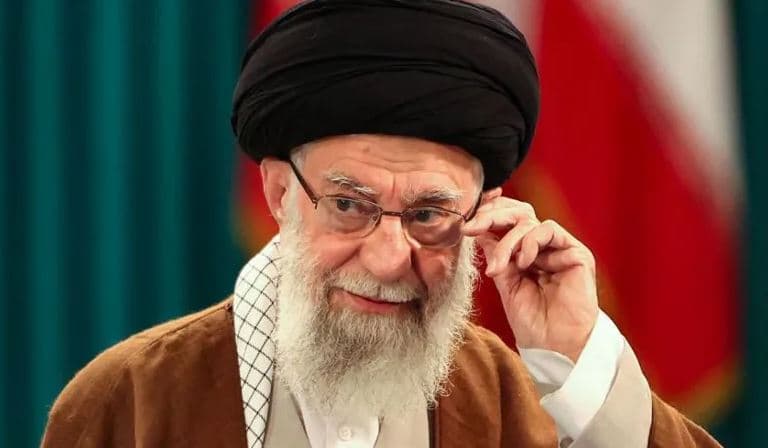
Khamenei’s death marks a historic turning point for the Islamic Republic of Iran. Ayatollah Ali Khamenei, who held ultimate authority in the country for 36 years, was killed in Israeli and U.S. airstrikes on Iranian targets on February 28, 2026, according to Iran’s Supreme National Security Council and state media. His death could have consequences far beyond a change in leadership, potentially disrupting one of the world’s most centralized theocratic political systems.
Having researched power transfers across the Middle East, Central Asia, and North Africa for nearly 10 years, I have seen how quickly a change at the top can disrupt an established political order. Iran’s transition carries that risk in an especially significant way. To understand what may follow his death, it is not enough to focus on the immediate aftermath. We also need to look at the political system he shaped, the institutions that hold it together, and the power vacuum created by his absence.
Who Was Ali Khamenei and How Did He Consolidate Power
In 1989, he took on the position of Supreme Leader after the passing of Ayatollah Ruhollah Khomeini, the founder of the Islamic Republic. He had the difficult task of assuming control of a Revolutionary state that was still in shock from the 8 year war with Iraq. The system that would evolve over the next 35 years would be drastically different from what Khomeini left him.
The doctrine of the Velayat-e Faqih (Guardianship of the Islamic Jurist) permits the Supreme Leader authority over the military, judiciary, state media, Guardian Council, Expediency Board, and the presidency. He used each aspect of the Constitutional framework to consolidate his power and turned the Islamic Revolutionary Guard Corps (IRGC) into an alternative state by creating a network of economic empires, violating economic sanctions, and building a regional proxy military presence using groups such as Hamas, Hezbollah and the Houthis.
His governing style heavily focused on the idea of calculated factionalism through the use of reformists versus hardliners and moderates versus conservatives while always casting himself as the one between the two that was necessary to have peace. This managed rivalry concept created his ability to stay in power. This same idea will lead to the eventual instability of Iran as soon as the hand that was managing these rival factions is taken away the rival factions no longer negotiate with each other but rather compete with each other with no restrictions.
Iran’s Accelerating Decline Before the Assassination
Before February 28th, he already showed that his grasp on power was deteriorating. Most media outlets covering this event have failed to present this important historical context.
The very first visible issue concerning his declining power occurred with his prostate cancer surgery in 2014. Since then, there have been multiple instances reported that confirm his deteriorating cognitive function, including frequent occurrences of incapacitation. For example, during the Twelve-Day War with Israel in June of 2025, credible Western and opposition sources reported that senior military commanders with-held accurate battle-field information from Khamenei, and Majlis Speaker Mohammad Bagher Ghalibaf assumed the role of commander-in-chief and made most of the important decisions when he was unreachable for long periods of time.
Iran's economy had collapsed around him in parallel. Inflation reached 49% by September 2025. The rial fell below one million to the dollar. The National Development Fund saw approximately $35 billion diverted to IRGC projects without oversight. IMF projections foresaw GDP contraction of 1.7% in 2025 and 2.8% in 2026. Water shortages led to rotational cutoffs in Tehran. These are not indicators of a functioning state. They are indicators of a state consuming itself.
The December 2025 uprising, which escalated through January 2026, reflected those pressures in their sharpest form. Leaked documents later reviewed by multiple outlets confirmed that he personally approved an IRGC-led suppression plan that transitioned from law enforcement to armed security operations by January 8, 2026. At least 6,854 people were killed according to human rights monitoring organizations. Protesters openly chanted for Khamenei's death. The regime's legitimacy had reached its lowest point since the 1979 revolution.
Then, on February 28, Israel and the United States acted.
The Constitutional Path to Succession and Its Political Complications
Iran’s Constitution sets out a formal process for replacing the Supreme Leader. Under Article 111, if the leader dies, is removed, or is unable to perform the duties of office, the Assembly of Experts is responsible for choosing a successor. In the interim, a three-member council comprising President Masoud Pezeshkian, judiciary chief Gholam Hossein Mohseni Ejei, and Guardian Council representative Ayatollah Alireza Arafi would oversee the leadership transition until a successor is formally chosen. The arrangement is intended to ensure continuity in government while Iran’s political institutions complete the succession process.
While the Constitution outlines the formal succession process, it does not fully explain how the transfer of power would work in practice. After Ayatollah Khomeini’s death in 1989, former President Ali Akbar Hashemi Rafsanjani played an important role in shaping the transition and helping consolidate Ali Khamenei’s position as Supreme Leader. His selection was also notable because he was not a Grand Ayatollah at the time. Rafsanjani remained an influential political figure for decades before his death in 2017. Today, however, there appears to be no single figure with a comparable level of political influence and ability to shape the succession process.
Khamenei had privately designated 3 clerics as candidates for succession in case he dies: Gholam Hossein Mohseni Eje'i and Asghar Hejazi and Hassan Khomeini (Ruhollah's grandson). The New York Times reported this list following strikes on February 28th. His son Mojtaba has also been mentioned in connection with succession but Ali Khamenei is said to be opposed to hereditary succession.
Each potential successor faces significant challenges. Hassan Khomeini was disqualified from the 2016 Assembly of Experts election and remains largely outside the regime’s inner circle. Mohseni-Eje’i has establishment credibility but may struggle to secure support from the IRGC, Qom’s clerical establishment, and reformists at the same time. Meanwhile, the IRGC’s growing political and economic influence means it is likely to play a major role in choosing and constraining Khamenei’s successor.
Iran’s Power Struggle and the Risk of Institutional Breakdown
My analysis is less optimistic than some of the views expressed in the West. Khamenei’s death could set off a serious power struggle among Iran’s established institutions. Over the years, each has built its own networks and power bases, making the succession process likely to involve competing interests within the IRGC, the clerical establishment, and political institutions.
The presence of the Iranian Revolutionary Guards Corps (IRGC) and its economic cartels dominate large portions of the sanctions-era Iranian economy as well as Ministries of Intelligence with their independent domestic surveillance and enforcement capabilities and a large number of clerical networks located in Qom and Mashhad that control their own independent financial resources and have competing bases of religious authority and a reformist political class that despite being violently repressed still exists.
After the June 2025 war, Supreme National Security Council got a new head, Ali Larijani, appointed by President Pezeshkian in August 2025, with Khamenei separately naming him his personal representative to the council days later.
Since then, Pezeshkian's government has been sidelined by the IRGC on security matters, and factional conflict over negotiating with Washington is now open and public, playing out against ~80% inflation and fuel shortages.
What Happens to Iran’s Nuclear Program and Regional Proxy Network?
The geopolitical implications will have ramifications that reach well beyond Tehran.
The nuclear program has already sustained significant damage from U.S attacks during the 2025 conflict and is now facing a gap in its governance at a time when decisions about compliance, concealment or renegotiation are at their most critical. No interim council will carry the same degree of legitimacy necessary to authorize major strategic level commitments regarding the nuclear file as does a current Supreme Leader. Foreign parties will have to await developments.
The regional proxy network, the Axis of Resistance framework that he has spent decades cultivating through relationships with Hezbollah, Shia militias, Houthis, and Palestinian groups, faces the greatest test ever of its institutional coherence. his relationships with these proxies provided them with funding, arms, and political legitimacy. The continued coherence of this network will depend on whether Khamenei's successor can command the same degree of loyalty and whether IRGC Quds Force commanders attempt to operate independently within these networks.
With regards to sanctions, the succession creates considerable uncertainty regarding any diplomatic outreach. Nuclear negotiations that began during the Biden administration became impasse. The Trump administration implemented maximum pressure on Tehran. Regardless of which individual becomes Supreme Leader, they will need to assert authority internally before any credible external diplomatic negotiations can occur.
Iran’s Opposition: Why Jubilation Is Not a Strategy
Many Iranian exiles are politically divided, many are waiting for an effective leadership, few will support the Pahlavi restoration of the Iranian monarchy. Many of the exiled leaders and politicians are foreign funded and historically have not had a good track record with any of the countries of the Mideast region. It is possible in the future to have a new Iranian governing body, however, it seems more likely that the IRGC will be given authority over the government at this point and will consolidate all power.
The analysts at CFR have indicated another possible scenario is that the Iranian government could use the moderate Khomeini to give it some domestic legitimacy as it keeps the hardline establishment in operational control. If Hassan Khomeini is present at the February 2026 crucial revolutionary event where a new Supreme Leader is chosen, it would appear he is a likely candidate to assume the office at that time.
Tonight, in the streets of Tehran, there are people celebrating, but all those who are celebrating have been fired on by the state in those streets, just like six weeks ago when they were firing on these people. Their aspirations are legitimate, but their ability to translate those political goals into effective government action remains constrained by the security forces’ ability to maintain cohesion and continue functioning effectively.
Historical Precedent: What the 1989 Transition Does and Does Not Tell Us
Institutionally speaking, all analyses up to now have only one reference point: the 1989 succession. It was a relatively straightforward process in that it resulted in Khamenei ascending to power as a result of Rafsanjani’s political skill in only a matter of days. Presently, however, there are no longer conditions in place that would provide for such a rapid and relatively orderly succession.
In 1989, the IRGC was not yet an autonomous political and economic entity. The clerical community in Qom did not have to go through a significant level of political vetting. The Assembly of Experts still consisted of predominantly serious members of the clerical establishment today, the membership consists almost entirely of political loyalists. In 2026, none of these factors will be present.
The comparison of the succession process starting today with the post-Stalin leadership struggle within the Soviet Union in 1953 will have more similarities than the difference between the Khomeini to Khamenei succession process. There was a vast number of years between when Stalin died and Khrushchev seized control, and the struggle for power involved a significant amount of internal violence. Iran’s institutions may prove less resilient than the Party was in 1953. If Iran comes under military pressure from outside, the scale of that pressure is likely to be far greater than it was at that time.