

What Happened at Met Gala 2026 and Why Isha Ambani's Look Is Dominating the Conversation
When Isha Ambani stepped onto the Met Gala 2026 red carpet in New York on Monday night, she did not simply attend fashion's biggest evening. She issued a statement rooted in craft, cultural identity, and institutional memory. In an era where viral fashion moments are manufactured for algorithmic consumption, her appearance cut through noise for reasons that are entirely substantive.
For the sixth time, Isha Ambani stepped onto the Met Gala carpet with a clear agenda to put Indian design on the global map and do it in deliberate detail. For the past three years, she has exclusively worn Indian designers, including Rahul Mishra in 2024 and Anamika Khanna the year before. That consistency is not incidental. It reflects a coordinated positioning of Indian couture within Western fashion's most scrutinized setting.
Who Designed Isha Ambani's Met Gala 2026 Look and What Makes It Significant
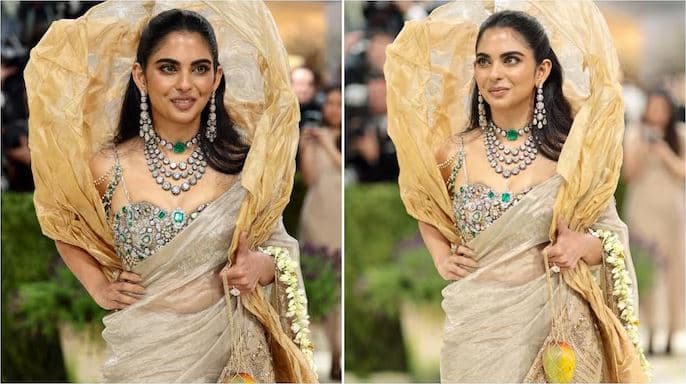
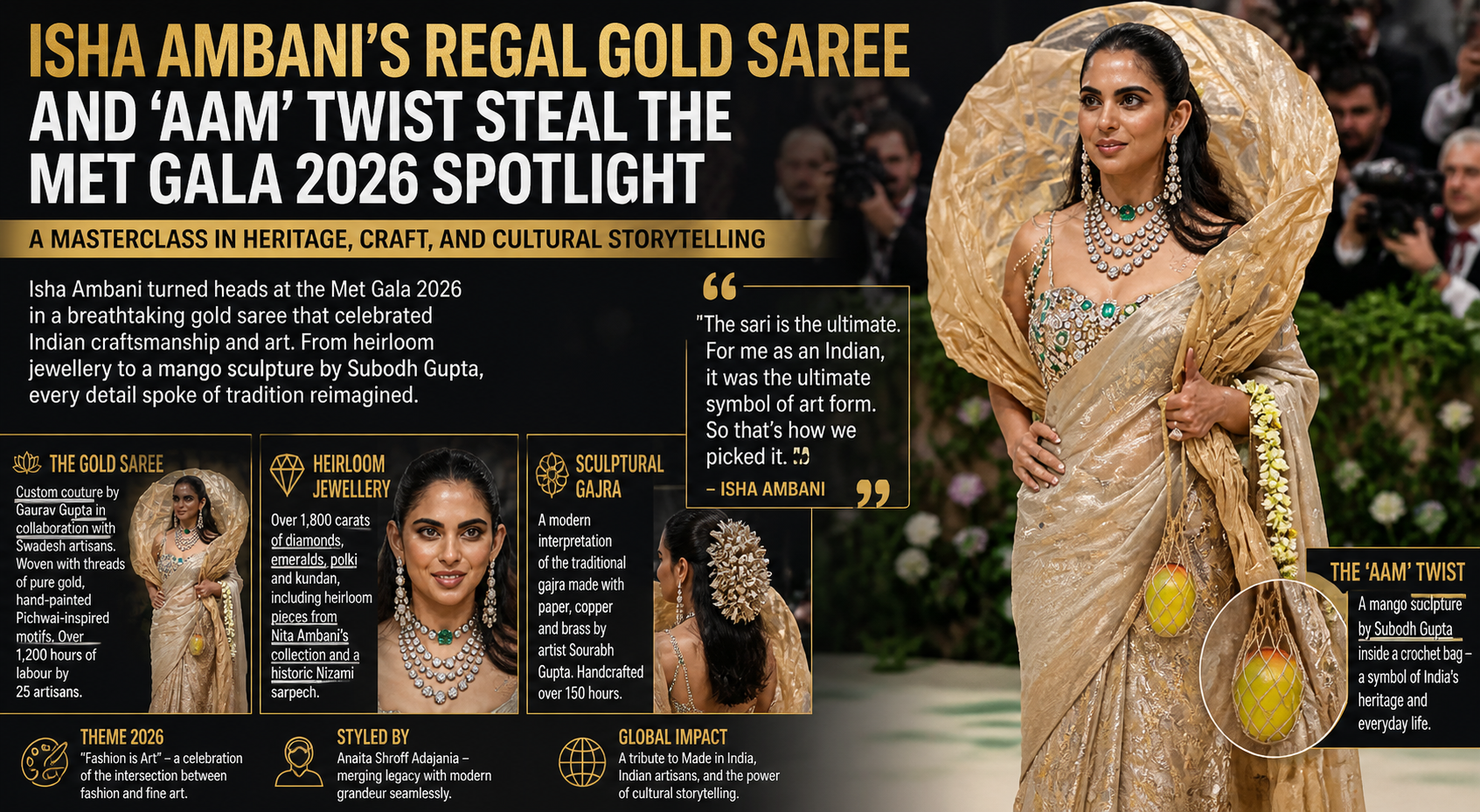
Isha wore a custom couture saree by Gaurav Gupta, created in collaboration with Swadesh artisans. The saree was woven with threads of pure gold and featured hand-painted Pichwai-inspired motifs in soft gold and earthy tones.
The custom saree was produced in collaboration with Swadesh, Reliance Retail's platform for artisan-led work. The piece required over 1,200 hours of labour and involved 25 artisans, underscoring the scale of its production.
A sculptural cape made from resin creates a halo-like effect around the body. It is crafted by folding the gold tissue saree into a fixed yet flowing shape, turning the fabric into a piece of art rather than just clothing.
This is not costuming. This is applied art, functioning within the "Fashion is Art" theme of the 2026 Met Gala in a way that is semantically precise rather than loosely interpretive.
How the Jewellery Elevated the Look Beyond Fashion Into Heirloom Territory
Isha Ambani wore more than 1,000 gemstones, collectively exceeding 1,800 carats. The selection included heirloom old mine diamonds from Nita Ambani's collection, paired with emeralds and polki, along with contemporary cut stones. Her blouse was densely set, functioning almost as a jewellery surface rather than a separate garment.
Isha said, "It's a sari, it's a hand-woven sari, and the blouse is full of my mother's jewellery."
The look also included a historic sarpech piece placed at the back, which was once part of the Nizam's collection. The presence of a Nizami sarpech at the Met Gala is a detail that fashion historians will note. It moves the conversation from trend coverage into cultural provenance.
What Is the Mango Detail and Why It Matters Culturally
The element generating the sharpest social media commentary is the mango. She carried a mango sculpture by contemporary artist Subodh Gupta, placed inside a crochet bag, an object that referenced everyday Indian imagery while aligning with the theme.
Mango, which is also the national fruit of India, lent deeper cultural symbolism to the striking piece.
Subodh Gupta is known internationally for large-scale installations using found objects drawn from everyday South Asian domestic life. His inclusion here is not decorative. It is a curatorial decision that roots the look in a serious contemporary art dialogue, one that western audiences may initially read as quirky but which carries significant semiotic weight for Indian viewers.
Who Styled the Look and What the Creative Brief Was
Styled by Anaita Shroff Adajania, Ambani's look aligned seamlessly with the "Fashion is Art" brief, translating it into something historic and unapologetically grand. According to Adajania, the aim was to merge legacy pieces with modern settings in a way that felt continuous.
In her hair, Ambani wore a sculptural interpretation of a traditional gajra, created using paper, copper and brass by Brooklyn-based artist Sourabh Gupta. The piece was handcrafted over 150 hours using paper, copper and brass.
The gajra, a jasmine hair accessory worn at weddings and religious occasions across South Asia, has never before appeared in this form at the Met Gala. Its material reinvention without loss of cultural legibility is precisely the kind of translation the "Fashion is Art" theme demands.
Why Isha Ambani's Reasoning for Choosing a Saree Is Worth Quoting Directly
Isha explained her choice of a saree by saying, "When we thought about it, and fashion is art, we were like, oh, like, the sari is the ultimate. For me as an Indian, it was the ultimate symbol of art form. So that's how we picked it."
This is not diplomatic phrasing for a press moment. It reflects a coherent interpretive framework that connects the garment form to cultural epistemology, which is exactly the intellectual register the Met Gala's curatorial arm expects from its invited guests.
What This Appearance Means for Indian Craft Visibility on Global Platforms
By showcasing the Swadesh movement, which aims to protect the art of handicrafts, she successfully turned the most viewed red carpet event into a tribute to "Made in India."
The global reach of the Met Gala red carpet, where broadcast and streaming audiences number in the tens of millions, functions as an unparalleled distribution channel for cultural narratives. Placing Swadesh artisans, Pichwai painting traditions, Nizami jewellery heritage, and Subodh Gupta's visual language within a single look creates a layered text that rewards both surface-level and deep engagement.
For analysts tracking how cultural influence is built and projected, this is a case study in soft power deployed through fashion. It is also a corrective against the tendency of western fashion media to treat Indian design as an exotic subcategory rather than a primary tradition with its own rigorous history.