

Paramount Skydance Corporation has formally confirmed its acquisition of Warner Bros. Discovery in a definitive merger agreement signed on February 27, 2026, closing one of the most contested bidding wars in Hollywood history. The deal, valued at approximately $111 billion, reshapes the American media landscape at a scale not seen since the AT&T and Time Warner combination in 2018.
This is not a routine corporate transaction. It is a structural realignment of who controls premium content, global streaming infrastructure, and theatrical distribution at the highest level of the industry.
Who Issued the Official Paramount Statement and What Did It Say
Paramount Skydance Corporation and Warner Bros. Discovery jointly announced the definitive merger agreement on February 27, 2026, under which Paramount will acquire WBD and form what both companies describe as a premier global media and entertainment company focused on expanding consumer choice and empowering creative talent worldwide.
In its statement, Paramount Skydance said the transaction reflects a shared vision of building a next-generation media and entertainment company that better serves both the creative community and consumers, with both parties working toward closing the transaction as soon as possible in the coming months.
Samuel Di Piazza Jr., chairman of the Warner Bros. Discovery board of directors, described the transaction as a historic deal guided by the singular principle of maximizing value from WBD's iconic assets, stating that the combination will expand consumer choice and develop new opportunities for creative talent globally.
Who Leads the Companies Behind This Deal
David Ellison, Chairman and CEO of Paramount, has stated publicly that the pursuit of Warner Bros. Discovery was rooted in the goal of building a next-generation media and entertainment company while honoring WBD's creative history.
Ellison first approached WBD CEO David Zaslav in September 2025, initially offering $19 per share for Warner Bros. Discovery, just weeks after Ellison's Skydance Media closed its prior acquisition of Paramount Global.
The financial backing behind Paramount's bid involves a consortium that includes sovereign wealth funds from Saudi Arabia, Qatar, and Abu Dhabi, alongside a personal commitment from Larry Ellison, David's father. Larry Ellison personally committed up to $46.7 billion toward the WBD deal.
Who Was the Competing Bidder and Why Did Netflix Withdraw
The acquisition did not proceed without a direct competitive challenge. Netflix entered the picture first.
The road to this merger began in late 2025 when Warner Bros. Discovery, led by CEO David Zaslav, signaled a need to manage its nearly $30 billion debt load. The industry was stunned on December 4, 2025, when Netflix entered a definitive agreement to acquire WBD's studio and streaming operations. Paramount Skydance then launched a superior all-cash tender offer for the entirety of WBD on December 8, 2025, initiating a high-stakes bidding war.
Netflix amended its agreement in January to an all-cash offer at $27.75 per share of Warner Bros. Discovery. Despite this, the Warner board repeatedly expressed concern about whether the Netflix structure provided sufficient value to shareholders.
Netflix co-CEOs Ted Sarandos and Greg Peters stated publicly on February 26 that the transaction they negotiated would have created shareholder value with a clear path to regulatory approval. Netflix subsequently withdrew after Paramount's bid was accepted.
Who Approved the Transaction and Under What Terms
The Financial Structure of the Deal
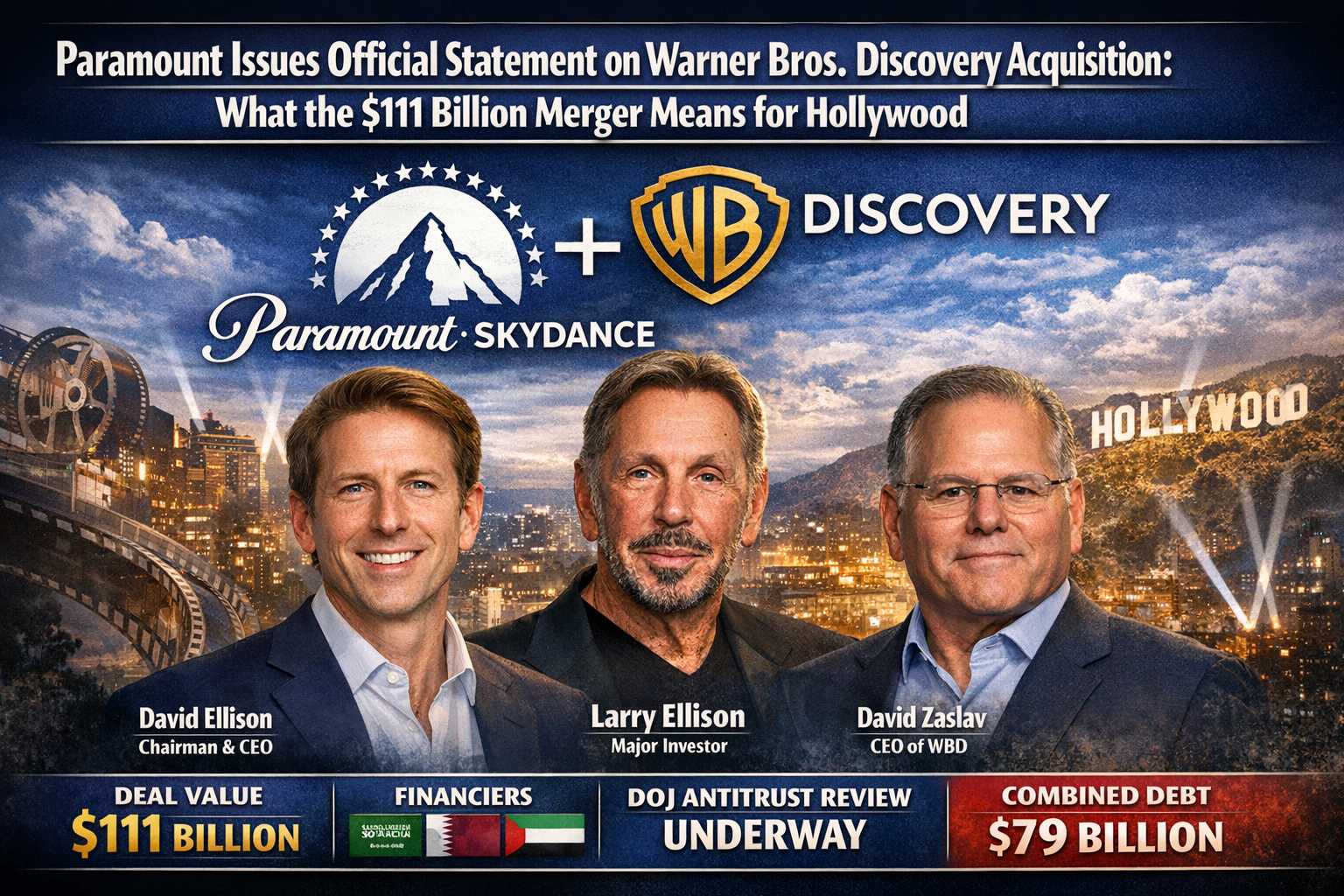
Under the terms of the agreement, Paramount will pay $31.00 per share in cash for all outstanding shares of WBD. The transaction has been unanimously approved by the boards of directors of both companies and is expected to close in Q3 2026, subject to customary closing conditions including regulatory clearances and approval by WBD shareholders.
The approved transaction represents a 147% premium over WBD's unaffected stock price of $12.54. However, Paramount will assume $33 billion in WBD's existing debt, which is expected to leave the combined entity with approximately $79 billion in long-term debt.
In the event the transaction has not closed by September 30, 2026, WBD shareholders will receive a $0.25 per share ticking fee for each quarter, measured daily, until closing.
Who Controls the Combined Company After Closing
David Ellison has promised that the merged studios will release 30 films per year, with plans to spend more on film production than any other media company. This represents a significant jump from the eight movies released by Paramount and 11 released by Warner Bros. in 2025.
Film industry experts have expressed skepticism about this production target. According to Cinema United, studio consolidations have historically led to fewer movies being made, raising concerns about increased prices, lower wages, reduced competition, and declining film quality.
Who Is Scrutinizing the Deal from a Regulatory Standpoint
The DOJ's Role in the Review Process
The Justice Department is currently probing the merger, which is not unusual for a transaction of this size. Antitrust experts do not believe the DOJ will ultimately sue to block the deal, though the approval process has been atypical. Paramount, whose regulatory efforts are being led by former DOJ antitrust chief Makan Delrahim, filed pre-merger notifications under the Hart-Scott-Rodino Act before it signed the merger agreement with WBD, which is unusual but legal.
On February 19, 2026, a critical milestone was reached when the 10-day statutory waiting period under the Hart-Scott-Rodino Act expired without the DOJ filing a motion to block the deal, a signal widely interpreted as a green light from federal regulators.
The acting head of the DOJ's antitrust division, Omeed Assefi, stated that the proposed transaction would not be placed on a fast-track for approval due to political reasons.
The DOJ has denied allegations that political allegiances played any role in its approach to the deal, with the department emphasizing that its ongoing review is strictly dictated by antitrust law and established consumer welfare standards. A coalition of Democratic lawmakers had alleged politicized favoritism in the regulatory process.
Who Bears the Integration Risk
The combined company will need to reconcile two different corporate cultures, merge two massive streaming platforms into a single technology stack, and find billions in synergies, an industry term for cost-cutting and layoffs. The market will be watching closely to see if David Ellison can manage the debt load while simultaneously funding the content engines required to keep the new entity competitive against Netflix, Amazon Prime Video, and Apple TV Plus.
Who Votes on Whether This Deal Moves Forward
A WBD shareholder vote has been scheduled, with the deal requiring approval by WBD shareholders before it can close. WBD shareholders who vote to approve the merger will receive $31.00 per share in cash, representing the highest all-cash offer tabled throughout the entire bidding war.
A definitive vote date was announced publicly in late March 2026 per regulatory filings submitted to the U.S. Securities and Exchange Commission.