

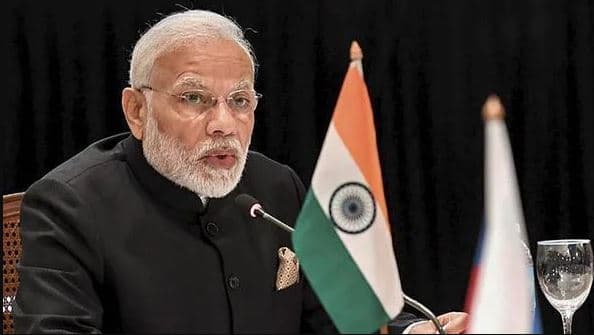
On September 17, 1950, in a small, dusty town called Vadnagar in the Mehsana district of what was then Bombay State, a child was born into a family of grocers with no political connections, no inherited wealth, and no expectation of national prominence. That child, Narendra Damodardas Modi, would go on to become the 14th Prime Minister of India, sworn in for a historic third consecutive term on June 9, 2024, making him only the second leader in independent India's history after Jawaharlal Nehru to achieve that distinction.
His journey from helping his father sell tea at a railway station to commanding the largest democracy on earth is not a linear tale of ambition fulfilled. It is a story built on ideological conviction, organizational discipline, political shrewdness, and a brand of Hindu nationalist governance that has polarized opinion across India and the world. As India navigates its most consequential period since independence, Modi remains the defining figure at the center of that story.
Who Is Narendra Modi: Early Life and Formative Years
Who Were Narendra Modi's Parents and What Was His Childhood Like
Narendra Modi was the third child of Heeraben Modi and Damodardas Mulchand Modi. His father ran a modest tea stall near the Vadnagar railway station, and as a young boy, Modi helped the family business by selling tea to train passengers. The household belonged to the Ghanchi community, classified under the Other Backward Classes category in Gujarat, a fact that would become a recurring theme in Modi's political identity.
Hiraben, who lived until December 2022 at the age of 99, was a homemaker of quiet influence. Modi has spoken often of her simplicity and hard work, describing visits to her modest home in Gandhinagar as among the most grounding moments of his public life. His father died in 1989, before his son ascended to any major office.
Where Did Narendra Modi Receive His Education
Modi completed his primary and secondary schooling at a government school in Vadnagar. Teachers from that period recall him as an alert student with an unusual appetite for debate and theatrical performance. He was neither a conventional academic nor an indifferent one. He was described as bright, curious, and already drawn to public engagement before he turned fifteen.
His higher education followed a non-traditional path. Modi earned a Bachelor of Arts degree in Political Science from the School of Open Learning at the University of Delhi in 1978. He subsequently completed a Master of Arts in Political Science from Gujarat University in Ahmedabad in 1983, a qualification he pursued through a correspondence program while already active in public life.
Why Did Narendra Modi Leave Home at the Age of Seventeen
At seventeen, Modi left Vadnagar under circumstances that remain somewhat contested in public record. He did not wish to proceed with an arranged marriage, and accounts suggest he traveled across India for nearly two years, visiting spiritual ashrams, including those associated with the teachings of Swami Vivekananda. This period of wandering appears to have deepened his sense of national identity and spiritual grounding, both of which would significantly shape his political philosophy.
In 1968, Modi was married to Jashodaben, a woman from his community, in an arrangement made by his family. The marriage was never consummated as a shared domestic life. Jashodaben, a retired school teacher, has remained a private figure throughout his political career. Modi formally acknowledged the marriage in his election affidavit in 2014, confirming her as his legally wedded spouse.
How Narendra Modi Entered the World of Politics
What Was Narendra Modi's Association with the RSS
Modi's political journey did not begin with a party membership form. It began when he was approximately eight years old, when he first came into contact with the Rashtriya Swayamsevak Sangh, the right-wing Hindu nationalist volunteer organization founded in 1925 on principles of cultural nationalism and Hindu solidarity. The RSS became the ideological and organizational crucible in which Modi's worldview was shaped.
By the early 1970s, Modi had formally joined the RSS as a pracharak, a full-time campaigner who dedicates his life to the organization's work and does not marry or maintain private property. His rise within the RSS hierarchy was steady. He was recognized for his organizational ability, his capacity to mobilize volunteers, and his understanding of political geography. He also organized a local chapter of the Akhil Bharatiya Vidyarthi Parishad, the student wing of the RSS, further cementing his reputation as a builder of institutions.
When Did Narendra Modi Join the Bharatiya Janata Party
In 1987, Modi transitioned from the RSS into the Bharatiya Janata Party. He was appointed General Secretary of the Gujarat unit of the BJP in 1988, a position that gave him direct operational control over the party's organizational activities in his home state. His years in the RSS had equipped him with skills that proved immediately useful: the ability to coordinate across large volunteer networks, the talent for mass communication, and an instinct for reading political sentiment at the grassroots level.
His national profile grew in 1990 when he helped organize Lal Krishna Advani's Rath Yatra, a politically charged procession across India that crystallized Hindu nationalist sentiment and contributed to the BJP's emergence as a major national force. He also played a significant role in organizing a similar march led by . By 1995, he was recognized nationally as a party strategist, credited with designing the campaign that delivered the BJP a landmark victory in the Gujarat state assembly elections.
How Did Narendra Modi Become Chief Minister of Gujarat
In October 2001, with Keshubhai Patel stepping down as Chief Minister due to health concerns and following electoral setbacks in state by-elections, the BJP leadership turned to Modi. He was sworn in as Gujarat's Chief Minister without having previously held a legislative position, a remarkable entry into executive governance by any standard. He then contested and won the Maninagar assembly seat, confirming his legislative standing.
Modi would go on to serve as Chief Minister of Gujarat for an uninterrupted period from October 2001 to May 2014, four consecutive terms, making him the longest-serving Chief Minister in the state's history and among the longest-serving in any major Indian state.
What Happened During the 2002 Gujarat Riots
No account of Modi's career can responsibly omit what remains the most contested chapter of his public life. In February 2002, following the burning of a train carrying Hindu pilgrims at Godhra station, which killed 59 people, communal violence erupted across Gujarat. The riots, which continued for several weeks, resulted in the deaths of over one thousand people, the majority of whom were Muslim. Tens of thousands were displaced.
Modi's government faced severe criticism for its response to the violence, with accusations ranging from delayed deployment of security forces to allegations of complicity. The Supreme Court of India appointed a Special Investigation Team to examine the evidence. In 2012, that SIT concluded there was no prosecutable evidence against Modi personally, and the Supreme Court upheld this finding in 2022. However, human rights organizations, opposition parties, and international observers have continued to argue that the state machinery failed to protect vulnerable communities.
The riots cost Modi his international standing for nearly a decade. The United States revoked his visa in 2005 under a provision that bars foreign officials deemed responsible for violations of religious freedom. The visa restriction was lifted only in 2014, after he became Prime Minister. The episode remains a defining point of contestation in any assessment of his governance philosophy and his relationship with India's Muslim minority, which constitutes approximately 14 percent of the national population.
What Did Narendra Modi Achieve as Chief Minister of Gujarat
What Was the Gujarat Development Model
Despite the controversy that surrounded his early tenure, Modi developed what became known in political and economic circles as the Gujarat Model of development. Between 2001 and 2014, Gujarat recorded consistent GDP growth rates that were among the highest in India. The state became a favored destination for industrial investment, partly due to the annual Vibrant Gujarat Summits that Modi instituted, which drew domestic and international businesses.
Infrastructure expansion, including road connectivity, power supply improvement, and irrigation projects under the Jyotigram Yojana scheme, became signature achievements of his administration. Proponents of the Gujarat Model pointed to improvements in industrial output, agricultural productivity, and ease of doing business. Critics argued that the growth was concentrated among certain communities and that human development indicators, including those related to child nutrition and minority welfare, showed less impressive progress.
How Did Modi Build His Political Brand During His Gujarat Tenure
Modi was among the first Indian politicians to systematically deploy modern communications strategy. He cultivated a direct relationship with voters through radio addresses, controlled media appearances, and an emphasis on personal branding built around the image of a decisive, incorruptible administrator who had risen from poverty without any dynastic advantage. His oratory, rooted in accessible language, emotional resonance, and a confident projection of Gujarati and Hindu pride, gave him a political style distinct from the coalition-era pragmatism that defined Indian politics through the 1990s and 2000s.
How Did Narendra Modi Become Prime Minister of India in 2014
By 2013, the Congress-led United Progressive Alliance government of Manmohan Singh was deeply unpopular. A succession of major corruption scandals, rising inflation, slowing economic growth, and a perception of policy paralysis had eroded public confidence. The BJP identified Modi as its answer to the electorate's demand for decisive leadership, naming him its Prime Ministerial candidate in September 2013, a move that generated internal party debate but proved to be a decisive strategic choice.
The 2014 general election campaign was unlike anything India had seen. Modi's team deployed cutting-edge digital communication, 3D hologram rallies that allowed him to address multiple constituencies simultaneously, and a message architecture built around two pillars: economic aspiration and the promise of strong, accountable governance. The BJP won 282 seats in the Lok Sabha on its own, a clear majority, the first time a single party had achieved that since 1984. The NDA coalition secured 336 seats in total. Modi was sworn in as Prime Minister on May 26, 2014.
What Were the Key Decisions and Reforms of Modi's First Term
What Major Economic Decisions Did Modi Take Between 2014 and 2019
Modi's first term was defined by a series of bold and, in some cases, deeply divisive economic interventions. In November 2016, he announced the demonetization of all 500 and 1000 rupee currency notes, withdrawing approximately 86 percent of India's currency in circulation with less than four hours of notice. The stated rationale was to disrupt black money hoarding, eliminate counterfeit currency, and push India toward a digital economy. The implementation was chaotic. Banks struggled to manage demand. Agricultural markets, which relied almost entirely on cash, faced severe disruption. The Reserve Bank of India later confirmed that nearly all the demonetized currency had been deposited, calling into question the black money elimination objective. Economists remain sharply divided on whether the long-term structural benefits justified the short-term economic disruption.
In July 2017, his government introduced the Goods and Services Tax, a comprehensive overhaul of India's indirect taxation structure that replaced a complex web of central and state levies with a unified national tax framework. The GST, whatever its implementation difficulties in the early years, represented the most significant tax reform in India's history since independence and fundamentally altered the economic relationship between the central government and the states.
What Social Welfare Programs Did the Modi Government Launch
Modi's government pursued a range of social welfare initiatives that were notable for their scale and their use of direct benefit transfers through the Jan Dhan Yojana financial inclusion architecture. The Pradhan Mantri Awas Yojana aimed to provide housing to rural and urban poor households; by 2024, over 4.2 crore houses had been sanctioned under the program. The Swachh Bharat Mission, targeting open defecation elimination, was credited with accelerating toilet construction across rural India to a degree that exceeded previous government programs. The Ujjwala Yojana provided subsidized cooking gas connections to households below the poverty line, reaching tens of millions of women who had previously relied on biomass fuels.
What Was India's Foreign Policy Under Modi's First Term
Modi arrived in office as a determined internationalist, despite his limited prior exposure to diplomacy. His neighborhood first policy emphasized building stronger ties with South Asian neighbors, beginning with his unprecedented invitation to the leaders of all SAARC nations to attend his first inauguration. He pursued deep engagement with Japan, the United States, Israel, and Gulf nations. His personal rapport with world leaders, including Barack Obama, Shinzo Abe, and Emmanuel Macron, elevated India's diplomatic visibility. The relationship with the United States deepened substantially, underpinned by convergent concerns about China's regional expansion.
Why Did Modi Win Again in 2019 and What Defined His Second Term
The 2019 Lok Sabha election delivered a verdict even more decisive than 2014. The BJP won 303 seats on its own, improving its majority. The campaign was conducted in the shadow of the Pulwama suicide bombing of February 2019, which killed 40 Indian paramilitary soldiers in Kashmir, and India's subsequent Balakot air strikes inside Pakistani territory, the first such strikes since the 1971 war. Modi framed national security as the central electoral issue, and the electorate responded. He was sworn in for a second term on May 30, 2019.
His second term produced decisions of historic consequence. On August 5, 2019, the government revoked Article 370 of the Constitution, which had granted Jammu and Kashmir a degree of special autonomous status since 1949. The state was simultaneously reorganized into two union territories: Jammu and Kashmir, with a legislature, and Ladakh, administered directly by the central government. The decision was upheld by the Supreme Court in December 2023. Supporters described it as a long-overdue integration of Kashmir into the Indian constitutional framework. Critics argued it was carried out without adequate democratic consultation and imposed a communications blackout on the region for extended periods.
In January 2020, his government's Citizenship Amendment Act, which provided an expedited path to Indian citizenship for religious minorities from three Muslim-majority neighboring countries, but explicitly excluded Muslim applicants, triggered the largest sustained protests India had seen in decades. The Shaheen Bagh sit-in in Delhi, led primarily by Muslim women, became a national symbol of civil resistance. The protests were disrupted by the onset of the COVID-19 pandemic in March 2020.
His government's response to the COVID-19 pandemic attracted both praise and criticism. The initial national lockdown, announced with four hours of notice, caused an acute humanitarian crisis as millions of migrant workers were left without income, transport, or shelter, and undertook journeys of hundreds of kilometers on foot to reach their home villages. The government's vaccination drive, branded Co-WIN, eventually became one of the world's largest in absolute terms, administering over two billion doses. However, the second wave of the Delta variant in April and May 2021 overwhelmed India's health infrastructure in ways that exposed deep deficits in public health capacity.
In January 2024, Modi presided over the consecration ceremony of the Ram Mandir in Ayodhya, the grand temple built on a site that had been the center of India's most politically charged legal and religious dispute for decades. The ceremony was widely seen as a significant moment in the BJP's Hindu nationalist project and was positioned to maximize its political impact ahead of the 2024 general elections.
What Happened in the 2024 General Election and What Is Modi's Third Term About
Why Did the BJP Lose Its Outright Majority in 2024
The 2024 Lok Sabha election produced a result that surprised much of India's political establishment. Modi had set an ambitious public target of 400 seats for the NDA coalition. The BJP won 240 seats, falling short of the 272 needed for an outright majority, a significant comedown from 2019. The NDA total of 293 seats was sufficient to form the government, but the BJP's dependence on coalition partners, principally the Telugu Desam Party and the Janata Dal (United), represented a fundamental shift in the political equation. The Congress-led INDIA alliance, written off by many analysts, secured 234 seats, with Congress alone winning 99, more than double its 2019 tally.
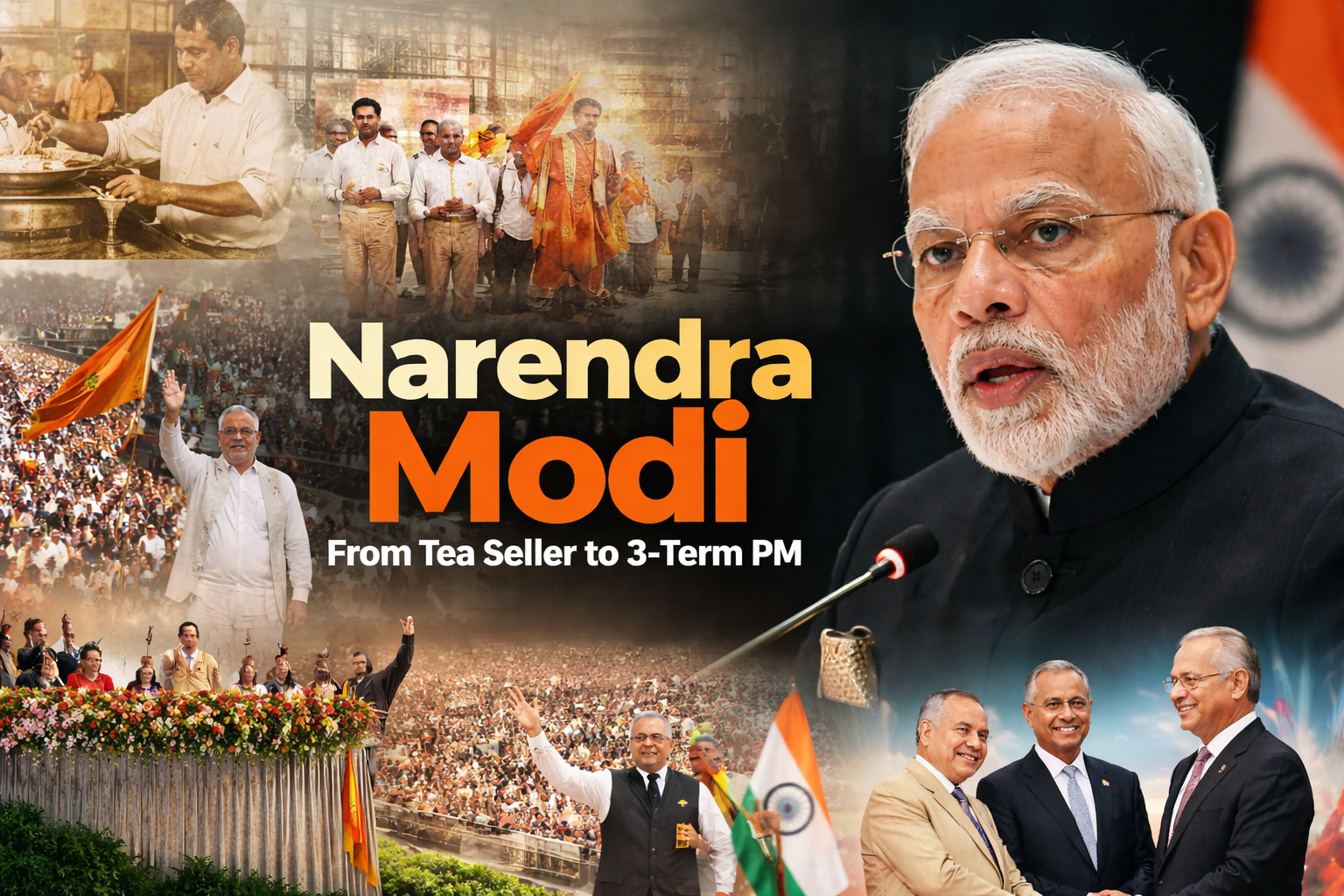
The result reflected several converging pressures: persistent unemployment, concerns about economic inequality, the consolidation of opposition votes in several major states including Uttar Pradesh, and a counter-mobilization among segments of the electorate who felt that the Modi government's cultural politics had come at the cost of economic delivery. Modi was sworn in for a third term on June 9, 2024, becoming the second Prime Minister in Indian history to serve three consecutive terms, after Nehru.
What Are the Key Focus Areas of Modi's Third Term
Modi's third term has been shaped by the arithmetic of coalition governance, a context that requires broader consensus-building and greater accommodation of allies' priorities than his previous two terms allowed. His government's initial cabinet decisions signaled continuity on housing, agriculture, and infrastructure. The third term has also been marked by renewed emphasis on India's manufacturing ambitions under the Production Linked Incentive framework, semiconductor investment, and the aspiration to make India a developed economy by 2047, a goal the government calls Viksit Bharat.
What Was Operation Sindoor and the 2025 India-Pakistan Military Conflict
On April 22, 2025, gunmen killed 26 civilians near the Pahalgam tourist site in Indian-administered Kashmir. The attack targeted Hindu tourists specifically, and India attributed it to Pakistan-backed militant groups. The Indian government announced a series of retaliatory diplomatic measures, including suspending the Indus Waters Treaty of 1960, closing the Attari-Wagah border crossing, and expelling Pakistani diplomats.
On May 7, 2025, India launched Operation Sindoor, a series of missile and air strikes targeting nine sites in Pakistan and Pakistan-administered Azad Kashmir that were identified as terrorist infrastructure linked to Lashkar-e-Taiba, Jaish-e-Mohammed, and Hizbul Mujahideen. The strikes marked the first use of BrahMos cruise missiles against Pakistan and the first Indian airstrikes on Pakistani territory since 1971. A ceasefire was reached on May 10, 2025, following back-channel engagement that included American, Saudi, and UAE diplomatic pressure, though India maintained publicly that the ceasefire was negotiated directly between the two countries' military operations directors.
Addressing the nation on May 11, 2025, Modi described the ceasefire as a pause rather than a conclusion, warning that further terrorist attacks would elicit a military response. He announced a new national counter-terrorism doctrine that articulated India's right to respond militarily to terrorism regardless of its source, without seeking international mediation. In a subsequent Lok Sabha session, he dismissed reports of American mediation, stating that India has never accepted third-party intervention and would not do so.
The conflict generated significant domestic and international debate. Domestically, opposition leader Rahul Gandhi questioned whether the ceasefire amounted to a surrender under pressure. Internationally, questions arose about India's diplomatic coalition-building, the performance of its military assets, and the long-term strategic implications of a doctrine of aggressive counter-terrorism applied against a nuclear-armed neighbor.
What Is Narendra Modi's Ideology and Political Philosophy
Modi's governing ideology is rooted in the tradition of Hindu nationalism, or Hindutva, which posits Indian national identity as inseparable from Hindu cultural heritage. He has framed his politics not as sectarian but as civilizational, arguing that the restoration of Hindu pride and the rejection of what the RSS calls pseudo-secularism are necessary for India's authentic self-expression as a nation.
In practice, this has translated into governance choices that critics describe as majoritarian, including citizenship legislation that created a religion-based distinction, appointments to cultural and educational institutions that reflect RSS ideological preferences, and an overall shift in the public discourse that has made Hindu identity more explicitly central to national political conversation.
Simultaneously, Modi has projected himself as a development-focused leader for whom poverty eradication, infrastructure modernization, and economic nationalism are the primary objectives. His slogan Sabka Saath, Sabka Vikas, Sabka Vishwas, roughly translated as Together with All, Development for All, Trust of All, is positioned as an inclusive framework. The tension between the inclusive development rhetoric and the exclusionary implications of certain policy choices remains central to any serious evaluation of his legacy.
What International Recognition Has Narendra Modi Received
Modi has received the highest civilian honors of a substantial number of countries, reflecting both India's growing strategic weight and his personal diplomatic investments. These include the Order of St. Andrew from Russia, the Order of Zayed from the UAE, the Grand Cross of the Legion of Honour from France, the Order of the Dragon King from Bhutan, the Sri Lanka Mitra Vibhushana from Sri Lanka, and the Order of Mubarak the Great from Kuwait, among many others. He received the Seoul Peace Prize in 2018 and the Legion of Merit from the United States in 2020. The United Nations adopted his proposal to declare June 21 as International Yoga Day, a diplomatic achievement that reflects India's cultural soft power under his stewardship.