

Who Is Amazon and What Is Its Financial Standing?
Amazon.com, Inc. is a US-based multinational technology and e-commerce company founded by Jeff Bezos in 1994. As of March 2026, Amazon holds a market cap of approximately $2.2 trillion, placing it among the five most valuable companies in the world. Annual revenue for 2025 reached $716.9 billion, a 12.38% increase from 2024. Its 2024 revenue was $637.9 billion, up 10.99% from 2023. Net income for full year 2024 was $59.2 billion, up 95% from 2023, with a profit margin of 9.3%.
These figures cover the entire Amazon business, which includes its retail marketplace, Amazon Web Services cloud division, advertising, and private label brands.
Who Started Amazon Private Brands and When?
Amazon launched its first private label, Pinzon, in 2005 through a trademark filing covering textiles and household goods. The brand went live in 2009. That same year, Amazon introduced AmazonBasics, covering home goods, office supplies, and electronics accessories. The goal was simple: control the brand, control the margin, and use Amazon's own logistics to undercut national brands on price without sacrificing delivery speed.
Who Built the Private Label Portfolio Year by Year?
2009 to 2017 was the foundation period. Amazon added private label lines across apparel, food, baby products, and household goods. The 2017 acquisition of Whole Foods for $13.7 billion was the biggest single move. It handed Amazon the established 365 organic store brand and integrated it into Amazon Fresh and the wider grocery ecosystem across the United States, United Kingdom, and Canada.
By 2019, Amazon's private label catalogue had reached its peak. A legal proceeding that year revealed the full scope: 158,000 products across 45 separate brand names. That same year, then-CEO Jeff Bezos testified before the US Congress on antitrust concerns. He confirmed that Amazon uses aggregated seller data to inform private label product development but stated the company had a policy against using individual seller-specific data. He could not confirm whether that policy had ever been violated.
Amazon Private Label sales reached more than $1 billion in Q1 2024, roughly equivalent in size to Samsung's sales on the platform. However, the scale of the programme was already shrinking from its 2019 peak.
Between 2021 and 2023, Amazon began cutting. The company launched Aplenty, a food brand, in 2021 but simultaneously started pulling back from clothing, eventually eliminating 27 of its 30 apparel private labels. Furniture brands including Rivet and Stone and Beam were shut down. In 2023, Amazon confirmed it was reducing the total private brand count to fewer than 20 labels, consolidating product lines under AmazonBasics and Amazon Essentials.
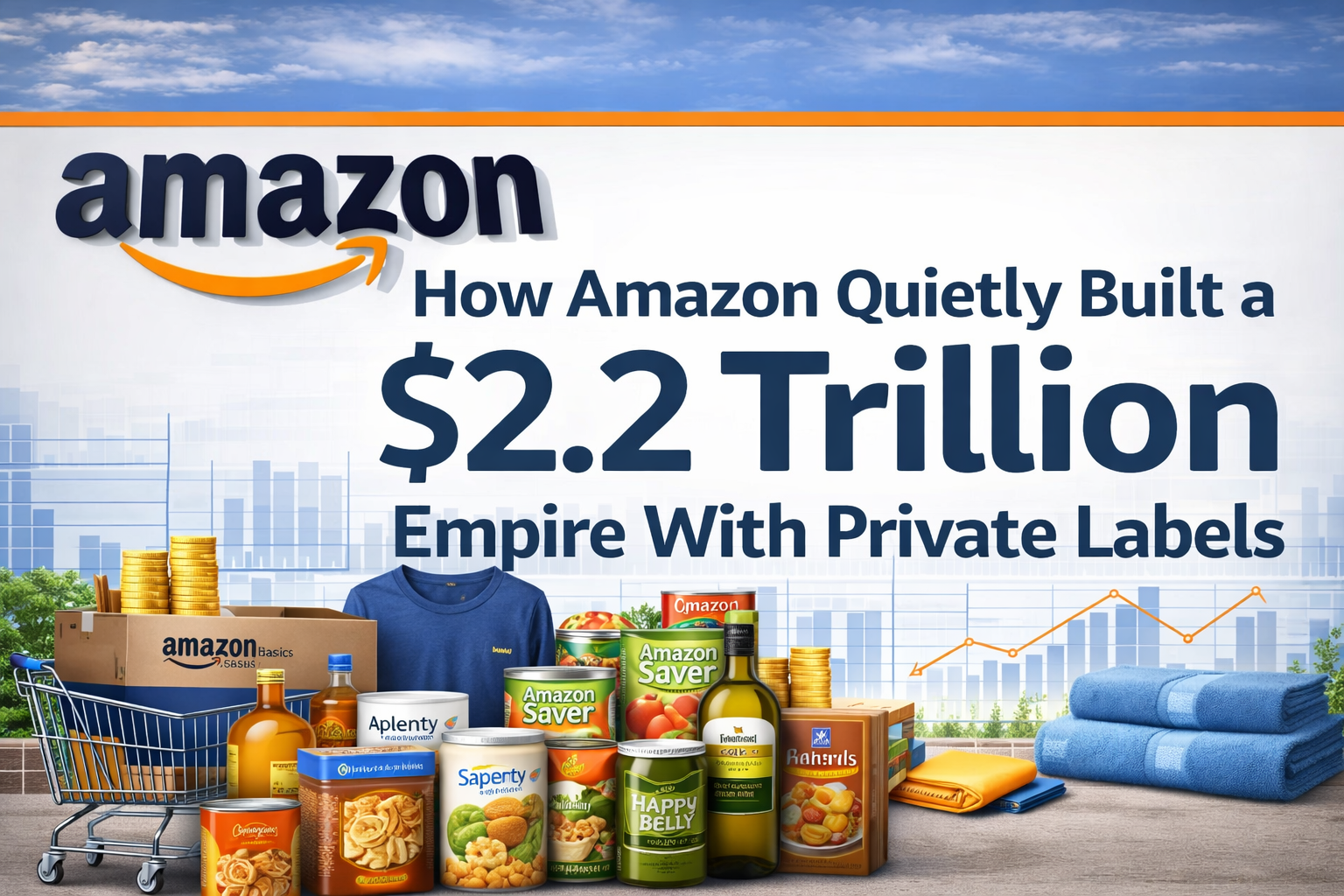
In 2024, Amazon launched Amazon Saver, a grocery value brand with products priced below $5 per item, covering crackers, deli meat, condiments, and canned goods. The launch directly targeted inflation-conscious shoppers and positioned Amazon to compete with Aldi and other discount food retailers. Amazon reported that customers purchased 15% more private brand products in 2024 compared to 2023 across Amazon.com, Whole Foods, and Amazon Fresh.
In October 2025, Amazon rebranded more than 1,000 food items previously sold under Amazon Fresh and Happy Belly into the Amazon Essentials line. Amazon Grocery launched simultaneously as a fresh food private label covering cage-free eggs, deli meats, bakery items, frozen meals, and refrigerated produce staples.
Who Competes With Amazon Private Brands?
Walmart's Great Value and the 2024 launch of bettergoods, Target's Mainstays, and Costco's Kirkland Signature are the primary competitors. US private label sales across all retailers hit a record $271 billion in 2024, growing faster than national brands for the third consecutive year. Amazon holds a relatively small share of that total. Between Q1 2023 and Q1 2024, Amazon's collective private label share of US retail revenue fell from 1.0% to 0.9%, with declines in 16 of the top 20 physical goods categories.
Who Earns What from Amazon Private Brands?
Amazon does not break out private label revenue separately in its public filings. The $1 billion-plus quarterly figure covers only Amazon's own-brand products, not the broader marketplace. The turnover of the overall Amazon business, at $638 billion in 2024 and $717 billion in 2025, dwarfs the private label segment, which accounts for less than 1% of total US Amazon retail sales by current estimates. Amazon's operating income in 2024 improved 86% year over year, rising from $36.9 billion to $68.6 billion, with an operating margin of 10.8%.