Johnson and Johnson won US approval for a daily psoriasis pill that rivals the benefits of injectable medicines and could roil a multibillion-dollar market. The drug, called Icotyde, represents a genuine structural shift in how the most advanced psoriasis therapies reach patients. As a data journalist who has tracked pharmaceutical market dynamics for over a decade, the numbers behind this approval tell a story that goes well beyond a single drug launch.
What Is Icotyde and What Did the FDA Approve?
The Drug, the Mechanism, and the Patient Population
The US Food and Drug Administration approved the drug for moderate to severe plaque psoriasis in adults and children 12 years of age and older who weigh at least 40 kilograms.
Icotyde is an orally administered peptide designed to block the IL-23 receptor, preventing it from binding to the IL-23 signaling protein that drives inflammatory and immune responses. It is the first in its class that can be taken orally, offering patients the convenience of a once-daily pill. Icotyde is the first targeted oral peptide that can precisely block the IL-23 receptor and is meant to be taken once daily with water upon waking.
How Icotyde Differs from Existing Treatments
Icotyde targets the same IL-23 receptor as best-selling shots like J&J's Tremfya and AbbVie's Skyrizi, giving patients an oral alternative to some of the most advanced and most expensive drugs on the market.
Patients with psoriasis typically cycle through topical drugs before getting prescribed an injectable therapy, and many opt out of treatment for reasons of convenience or cost. J&J sees Icotyde becoming the first-line systematic treatment for psoriasis, sitting in between topicals and shots.
The Market Data: A Multibillion-Dollar Disruption
Peak Sales Projections Across Wall Street
The financial projections for Icotyde reveal just how significant this approval is expected to be across the analyst community.
J&J expects the drug to bring in more than 8 billion dollars in annual sales at its peak. Guggenheim analyst Vamil Divan estimates that Icotyde could generate more than 8 billion dollars in annual peak sales. Citi analysts foresee rapid market penetration and 5.5 billion dollars in peak sales, while Jefferies analysts previously pegged 7.5 billion dollars in peak US sales for the drug across various indications.
Wall Street analysts have said Icotyde has blockbuster potential as a safe and effective oral, and that the once-daily medication could capture significant market share from injectables like Skyrizi and J&J's own Tremfya.
The Existing Market Icotyde Is Entering
To understand the scale of disruption Icotyde represents, the existing competitive data is essential context.
Stelara is J&J's second-largest product by revenue. While it tallied 6 billion dollars in 2025 sales across all of its approved indications, that figure is a 41 percent decline from the prior year due to growing biosimilar competition. J&J's third-largest product is the IL-23-blocking antibody Tremfya. Across all of its approved indications, including plaque psoriasis, Tremfya accounted for 5.1 billion dollars in sales last year, a 39.8 percent increase compared to the prior year.
J&J's immunology portfolio pulled in 15 billion dollars in 2025 sales on the back of blockbusters Stelara and Tremfya.
Rival shots Tremfya and Skyrizi cost around 100,000 dollars a year. J&J has not yet announced how much Icotyde will cost, beyond saying the company will help people pay for the medicine.
The Stock Market Response
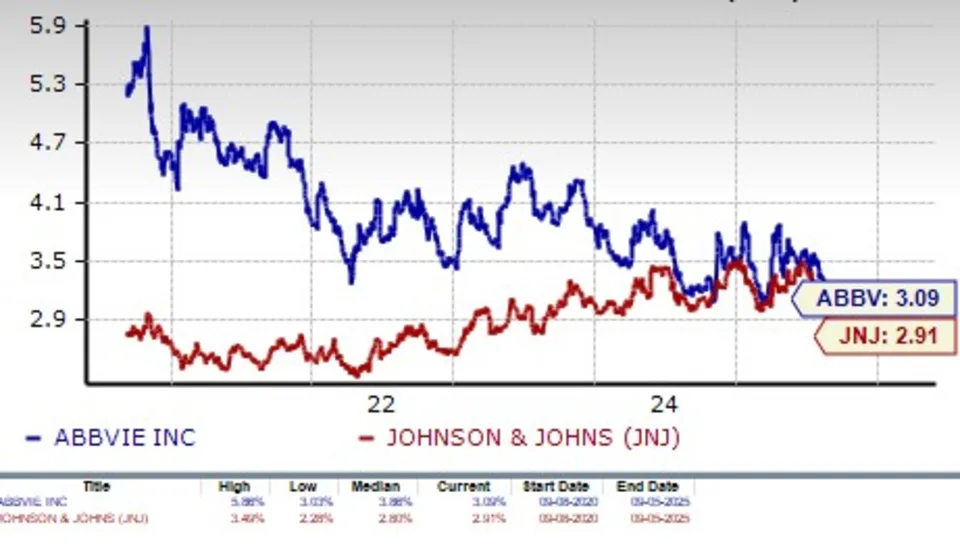
Shares of J&J slid one quarter of a percent on Wednesday while shares of Skyrizi-maker AbbVie fell more than 4 percent. Protagonist Therapeutics, a biotech company that developed Icotyde with J&J, was trading about flat.
The AbbVie decline is the most telling data point. A single FDA approval moved the market capitalisation of a competing pharmaceutical giant by more than 4 percent, a clear signal of how seriously investors expect Icotyde to cannibalise injectable market share.
Why 75 Percent of Psoriasis Patients Never Reach Advanced Treatment
The Treatment Gap in the Data
J&J estimates about 8 million people in the US have plaque psoriasis, and that 75 percent of people do not advance from topicals to shots because of reasons like fearing needles.
This is the single most important statistic in the Icotyde story. A drug that can reach even a fraction of the 6 million patients currently stuck at the topical stage represents an enormous untapped market.
Jennifer Taubert, chairman of J&J Innovative Medicine, said that to be able to have something that is relatively simple, that offers that level of clearance, a trusted safety profile, and in a simple pill, we think is going to be revolutionary. We believe having the type of profile that Icotyde has in a simple, once-daily oral pill is going to be an absolute game changer for patients.
The Clinical Trial Data
The drug has shown superior skin clearance compared with Bristol's Sotyktu in two late-stage, head-to-head trials. Patients have been looking for complete skin clearance, a favourable safety profile, and the simplicity of a once-a-day pill, David Lee, J&J's global head of immunology, told Reuters ahead of the decision.
Icotyde's biologic-level efficacy and once-daily pill convenience factor is a combination previously unattainable in psoriasis therapy, Citi analysts wrote in a recent note to clients.
The Competitive Landscape: How Icotyde Stacks Up
IL-23 Pathway: The Dominant Treatment Target
The FDA-approved plaque psoriasis treatments that work by blocking the IL-23 pathway include AbbVie's Skyrizi and Sun Pharma's Ilumya, both injectable medications. IL-23 is a target J&J knows well. Plaque psoriasis is already a big part of the company's portfolio through Stelara, an injectable antibody drug designed to block the IL-12 and IL-23 signaling proteins.
J&J's oral pill, like AbbVie's Skyrizi and J&J's own Tremfya, is designed to block a protein, IL-23, involved in inflammatory responses. The oral drug is developed in partnership with Protagonist Therapeutics.
Head-to-Head Against Sotyktu
The first-of-its-kind oral drug, branded as Icotyde, will help the drugmaker expand into the psoriasis market and compete with treatments such as Bristol Myers Squibb's Sotyktu and AbbVie's Skyrizi. The two head-to-head trials showing superior skin clearance against Sotyktu are a strategically significant data point because Sotyktu has been the primary existing oral option in the advanced psoriasis space.
Pipeline Expansion: Beyond Psoriasis
Four Indications in Development
J&J is also studying the drug, chemically known as icotrokinra, for ulcerative colitis, psoriatic arthritis, and Crohn's disease.
The pipeline data reframes the financial projections significantly. The analyst estimates of 7.5 to 8 billion dollars in peak sales are not based on psoriasis alone. They reflect the drug's potential across the full autoimmune indication set. Each additional approved indication represents a new patient population, a new payer negotiation, and a new revenue stream.
While Icotyde's market entry bolsters J&J's stalwart immunology portfolio, it also ensures a transformative year for Protagonist, the California-based biotech that developed Icotyde alongside J&J. Protagonist is also awaiting a third-quarter FDA decision for Takeda-partnered rusfertide, a first-in-class prospect for the blood disorder polycythemia vera.
The Pricing Question: The Data Gap That Matters Most
The most consequential number missing from today's announcement is the price. J&J has not announced how much Icotyde will cost beyond saying the company will help patients pay for the medicine. Rival injectable treatments Tremfya and Skyrizi cost approximately 100,000 dollars per year.
The pricing decision will determine whether Icotyde actually reaches the 75 percent of patients currently stuck at topical treatment, or whether it simply replaces existing injectable revenue at the same price point with a more convenient delivery format. That distinction matters enormously for patients, for payers, and for the public health argument J&J is making about market expansion.
If Icotyde is priced at or near the injectable benchmark of 100,000 dollars per year, the convenience advantage alone may not be sufficient to move the 6 million Americans who have not advanced beyond topicals. Insurance coverage patterns for oral versus injectable biologics, prior authorisation requirements, and step therapy protocols will all shape the real-world uptake curve in ways that the clinical trial data cannot predict.