

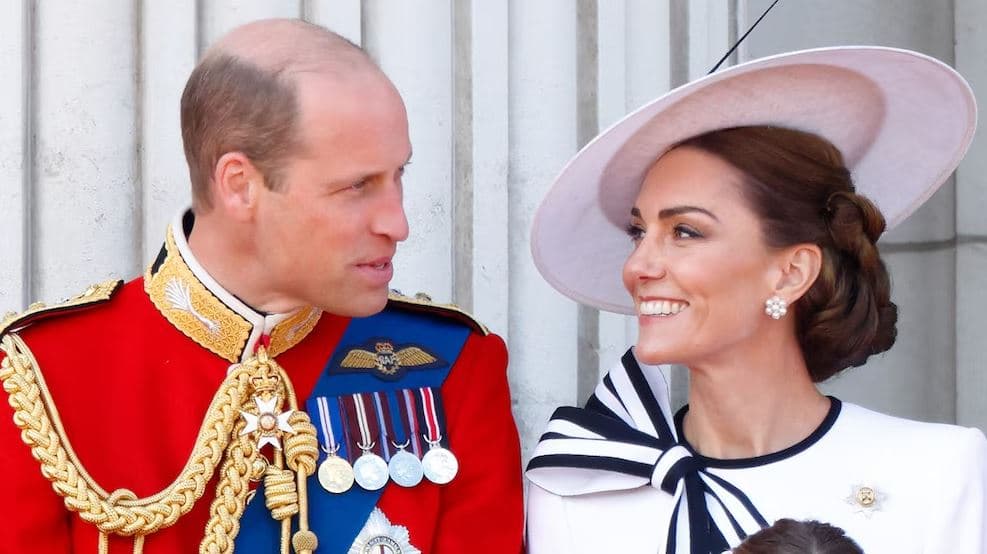
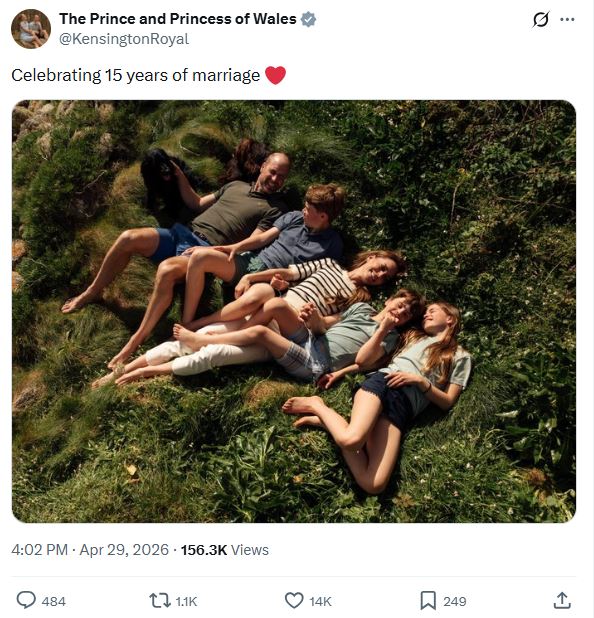
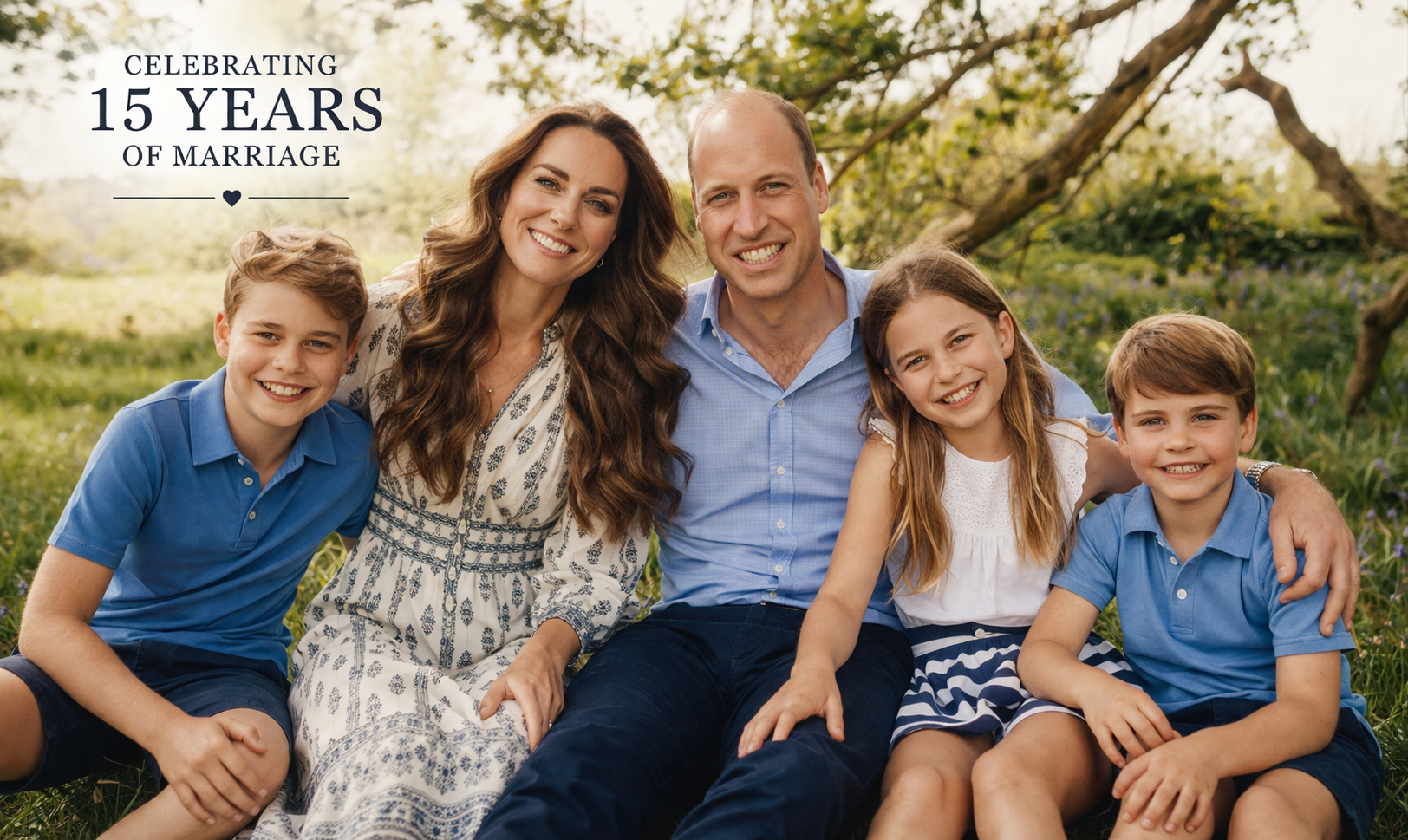
On April 29, 2026, Prince William and the Princess of Wales marked their 15th wedding anniversary with the release of a new family portrait, capturing the couple alongside their three children, Prince George, Princess Charlotte, and Prince Louis, relaxing together on the grass. The photograph, taken by photographer Matt Porteous during the family's Easter break in Cornwall, was shared with a simple message: "Celebrating 15 years of marriage."
For those who track how public figures navigate media ecosystems, this anniversary is more than a sentimental milestone. It is a case study in authentic institutional communication, resilience under sustained public scrutiny, and the careful reconstruction of trust following one of the most challenging periods the British Royal Family has faced in decades. The Wales family's ability to maintain public credibility while managing genuine private hardship is, from a media literacy standpoint, one of the more instructive stories in contemporary royal communications.
Who They Were Before the Crown: The University Origins of a Modern Royal Partnership
Prince William and Catherine Middleton first met in 2001 while studying at the University of St Andrews. They began dating in 2003. Their relationship did not emerge from institutional arrangements or strategic positioning. It developed through shared academic environments, friendship, and time, which is precisely why it has maintained a degree of public authenticity that royal partnerships of prior generations often lacked.
The two first crossed paths in their dorm building, St. Salvator's Hall. Catherine recalled their early meeting, saying she "went bright red" when she met him and "scuttled off, feeling very shy." William added that their relationship progressed naturally, explaining they were "friends for over a year first, and it just sort of blossomed from then on."
From a media credibility perspective, this origin story has proven durable precisely because it resists the mythology of arranged royal courtship. It gave the public a genuine narrative anchor and one that has held up over fifteen years of institutional and personal pressure.
Who Was Present on April 29, 2011: The Wedding That Became a Global Media Event
Prince William proposed to Catherine while on holiday in Kenya in October 2010. Clarence House formally announced the engagement on November 16, 2010, and the date and location of the ceremony were confirmed as Friday, April 29, 2011, at Westminster Abbey.
William and Kate wed at Westminster Abbey in London on April 29, 2011, in a ceremony watched by millions of people around the world. In the United Kingdom, television audiences peaked at 26.3 million viewers, with 36.7 million watching at least part of the coverage.
The bride wore a satin and lace wedding dress designed by Sarah Burton of Alexander McQueen and the Cartier Halo tiara. Prince William proposed with his mother's engagement ring, a blue sapphire and diamond piece belonging to Princess Diana.
The media infrastructure that surrounded this event set an important precedent. It established William and Catherine as the primary faces of a modernizing monarchy, capable of attracting global attention while projecting stability and continuity. That positioning has shaped every subsequent media narrative about the couple, both celebratory and adversarial.
Who They Became After the Wedding: Titles, Children, and Royal Identity
After the ceremony at Westminster Abbey, the newly married couple were titled Their Royal Highnesses The Duke and Duchess of Cambridge. That title held for over a decade before both received new designations following King Charles III's accession to the throne in September 2022, with William becoming Prince of Wales and Catherine becoming Princess of Wales.
The couple is now parents of three children: Prince George, age 12, Princess Charlotte, age 10, and Prince Louis, age 8.
Since their earlier newlywed days as the Duke and Duchess of Cambridge, embarking on major overseas tours and beginning married life together in a cosy cottage on the Isle of Anglesey, they have grown considerably. Their evolution from a newly married couple navigating early royal life to the family now widely regarded as the institutional future of the monarchy is a trajectory that has been shaped both by deliberate strategy and by genuinely difficult lived experience.
Who Stood Beside Whom When It Mattered Most: Catherine's Cancer Diagnosis and the Couple's Public Resilience
No honest account of this 15-year marriage can omit the events of 2024, which represented the most significant test of the couple's private bond and public credibility simultaneously.
Following months of speculation about her well-being, Catherine, Princess of Wales, revealed she had been diagnosed with cancer in March 2024, sharing that she would undergo chemotherapy. Her next update came in June of that year, when she said she was receiving treatment and made her first public appearance in months, at Trooping the Colour.
The princess revealed that she completed chemotherapy, stating: "Doing what I can to stay cancer-free is now my focus. Although I have finished chemotherapy, my path to healing and full recovery is long, and I must continue to take each day as it comes."
Catherine said she was in remission in January 2025, visiting the Royal Marsden Hospital, where she had received treatment, to thank all the medical staff there. She described the impact on her family as "really, really tough."
During a visit to a cancer support center in July 2025, the 43-year-old told patients, volunteers, and staff that life following cancer treatment was not plain sailing. "It's a roller coaster, it's not one smooth plain, which you expect it to be," she said.
In March 2026, during a visit to a beer hall in London, the Princess of Wales openly shared a lifestyle change she had made since her diagnosis, explaining: "Since my diagnosis, I haven't had much alcohol. It's something I have to be a lot more conscious of now."
What makes this communications trajectory significant from a media literacy standpoint is its consistency. The palace controlled the timing and framing of every disclosure, released updates in Catherine's own voice, and avoided speculation by providing direct statements. This approach effectively countered a significant volume of online disinformation and unverified health speculation that circulated during her initial absence from public duties in early 2024.
Royal author Katie Nicholl has stated: "They are very much still in love and united, and have been through things which could have broken a couple, and they deserve to celebrate together."
Who Carries the Institutional Weight of the Future Monarchy: William and Catherine as Heirs Apparent
If 2025 was a year of adjustment and transition, then 2026 is shaping up to be the moment William and Catherine truly settle into their future roles as King and Queen.
Palace sources have confirmed that the Prince and Princess of Wales will place a real emphasis on British businesses, skills, and creativity, as well as unsung community heroes, in at least one engagement a month through 2026. The aide stated: "It's really important for the Prince and Princess of Wales to shine a spotlight on the unsung heroes of the UK. There will be a real emphasis in 2026 on showcasing some of the best of Britain."
In 2024, William and Catherine raised £12.2 million for their Royal Foundation, a 53% increase in income compared to the prior year, largely thanks to donations and legacies.
Catherine will be the first Princess of Wales in 115 years to receive the centuries-old honour of granting Royal Warrants. Mary of Teck, grandmother to Queen Elizabeth II, was the last woman to grant a Royal Warrant while holding the title of Princess of Wales, back in 1910, prior to her husband ascending the throne. Notably, Princess Diana, who held the title before Catherine, was never afforded this privilege.
Who Is Driving Catherine's Charitable Mission and What Impact Has It Created
Over the last decade, the Princess of Wales has spent time looking into how experiences in early childhood are often the root cause of today's hardest social challenges, such as addiction, family breakdown, poor mental health, suicide, and homelessness. Her Royal Highness has seen over and over again how often these problems can be traced back to the earliest years of someone's life.
The Princess of Wales established the Business Taskforce for Early Childhood in March 2023 with eight of the UK's leading businesses, including NatWest Group, Unilever, Aviva, Deloitte, IKEA, Co-op, the Lego Group, and Iceland.
In May 2025, Deloitte introduced six months' paid paternity leave, citing Catherine's influence through the task force. This is not symbolic charitable engagement. It is measurable, policy-level impact achieved through institutional advocacy, which is precisely the kind of authoritative philanthropic leadership that builds lasting public trust.
Who They Are as Parents: The Private Architecture of a Royal Family
A friend of the couple has stated: "They're a great example of a happy family. William has always been intent on achieving that. Catherine also comes from a near-idyllic family background, with her two amazing parents and close sibling relationships. The Prince and Princess of Wales have set a wonderful example themselves, not least in how they have brought up their children, affording them as much freedom in their growing-up years as they possibly can."
Their eldest son is on the cusp of becoming a teenager. When he begins his secondary education in September, this new phase may give William and Catherine the first inkling of what an empty nest might feel like in the years to come.
A close friend confirmed: "One steadfast thing that hasn't changed is that the children remain at the centre of her universe, and William's. They continue to be hands-on parents. Nothing matters to them more."
Who They Are to Each Other After 15 Years: What Royal Experts Observe
Royal expert Richard Palmer has noted that the couple values privacy above all, explaining that whenever anyone who knows them is asked how they will celebrate, the answer is always the same: privately.
For their 15th anniversary, the traditional gift is crystal, symbolising the fragility of a relationship and the care required to protect it.
Those closest to the couple say the William and Catherine of 2026 are in many ways different from the newlyweds who stepped out of Westminster Abbey in 2011. A source close to the couple noted: "It's made them stronger, wiser, and has reinforced their incredible bond. There's probably not much that could be thrown at them they couldn't handle now."