

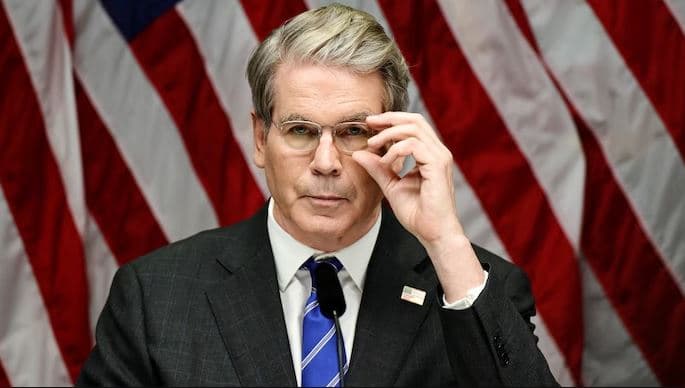
The Trump administration's anticipated executive order requiring banks to collect citizenship information from customers has ignited a contentious debate over privacy rights, implementation costs, and economic consequences. Treasury Secretary Scott Bessent confirmed the order is currently being processed, signaling a fundamental shift in how American financial institutions verify customer identities.
This proposed mandate represents one of the most significant changes to U.S. banking regulations in decades, potentially affecting hundreds of millions of account holders while imposing billions of dollars in compliance costs on financial institutions already struggling with regulatory burdens.
The Scope and Mechanics of the Proposed Rule
The executive order would require banks to request additional documentation such as passports from both new and existing customers who wish to open or maintain bank accounts in the United States. Unlike current Customer Identification Program requirements that verify identity through driver's licenses and Social Security numbers, the new rule would mandate verification of actual citizenship status.
Under existing CIP requirements administered by the Financial Crimes Enforcement Network (FinCEN) pursuant to the Bank Secrecy Act, banks must collect identifying information including name, address, date of birth, and taxpayer identification number. The proposed citizenship verification would expand these requirements substantially.
Bessent indicated that Real IDs would not be considered legal documents under this new executive order, meaning customers would need to provide passports, birth certificates, or other official citizenship documentation. This distinction raises immediate practical concerns, as approximately 183 million U.S. passports were in circulation as of 2025, compared to over 340 million individuals living in the country.
Financial Impact on Banking Institutions
The economic burden of implementing citizenship verification has alarmed industry analysts and financial institutions. Research from the American Action Forum estimates this action could result in anywhere from 33.1 to 73.3 million additional paperwork hours and costs ranging from $2.6 billion to $5.6 billionor the banking sector.
These projections focus primarily on new account verification, representing only a fraction of potential costs. Verifying existing accountholders would add millions of hours and billions of dollars in administrative costs, even under the most conservative assumptions.
FinCEN currently estimates that the CIP process takes 3 minutes for each new account and amounts to roughly 2.8 million hours of paperwork annually. Adding citizenship verification would require customers to procure additional documentation and banks to establish new recording systems, dramatically increasing processing time and expense.
The compliance infrastructure needed extends beyond simple document collection. Banks would need to train staff, update computer systems, establish verification protocols, and create audit trails for citizenship documentation. For smaller community banks and credit unions, these costs could prove particularly burdensome relative to their operating budgets.
Privacy and Civil Liberties Concerns
Privacy advocates have raised serious concerns about the data collection expansion and its implications for American citizens. The proposed rule arrives amid growing scrutiny of government data gathering practices, particularly following revelations about the Systematic Alien Verification for Entitlements (SAVE) system.
Critics worry about mission creep in citizenship databases. While ostensibly designed to prevent undocumented immigrants from accessing banking services, the data collection infrastructure could serve multiple government purposes beyond its stated intent. The lack of transparency regarding data retention, access controls, and secondary uses has alarmed privacy experts.
Internal resistance has surfaced within the Treasury Department, with some officials characterizing the idea as a complete nightmare logistically and stating that verifying every customer's citizenship status would be unworkable. This internal skepticism suggests significant implementation challenges that extend beyond privacy concerns into operational feasibility.
The banking industry has questioned whether such a mandate is even legal under existing regulatory frameworks, raising constitutional issues about federal authority over private financial transactions and potential discrimination concerns.
Economic Consequences for the Unbanked
Economic analysts warn that citizenship verification requirements could significantly expand the unbanked population, with ripple effects throughout the economy. Allowing noncitizens, including undocumented immigrants, to legally open bank accounts using documentation such as an Individual Taxpayer Identification Number (ITIN) means they can pay taxes and avoid being part of the unbanked economy existing in a purely cash economy.
Being unbanked creates substantial barriers to economic participation and upward mobility. Without bank accounts, individuals struggle to receive wages electronically, build credit histories, access loans, pay bills efficiently, and participate in the digital economy. These limitations affect not only immigrants but also American citizens who lack ready access to citizenship documentation.
Being unbanked is often associated with less ability to move up the social ladder and contribute to economic growth. The expansion of the unbanked population could reduce tax revenues, increase reliance on expensive check-cashing services, and push more economic activity into informal cash markets that lack transparency and oversight.
Immigrant advocacy groups emphasize that legal immigrants and those with work authorization currently contribute substantially to tax revenues through bank accounts linked to their ITINs. Restricting their access to banking services could paradoxically reduce government revenue while increasing enforcement costs.
Political Context and International Comparisons
Senator Tom Cotton (R-Ark.) sent a letter to Bessent last October urging the Treasury Department to undertake a comprehensive review of current rules that allow illegal aliens to obtain financial services and access to the U.S. banking system. Republican lawmakers have framed the issue as one of national sovereignty and rule of law.
Bessent told CNBC that every other country requires citizenship information for banking access and that there should be stricter rules. However, this characterization oversimplifies international banking practices. While many countries do collect nationality information, the specific requirements, enforcement mechanisms, and exceptions vary widely.
Singapore requires banks to record nationality as standard customer data, and for higher-risk clients to verify current and previous citizenships under Monetary Authority of Singapore guidance. Canada and Australia similarly require banks to verify nationality using passports or citizenship documents, while Switzerland, Hong Kong, and the United Arab Emirates list nationality or passport verification as required identification data.
The international comparison reveals nuances that the administration's rhetoric obscures. Many countries with citizenship verification requirements implemented them gradually with substantial notice periods, technological infrastructure investments, and exception processes for residents and legal immigrants.
Know Your Customer Rules and Existing Frameworks
The U.S. banking industry follows Know Your Customer regulations, which collect Social Security numbers, Individual Taxpayer Identification Numbers, names, dates of birth, and addresses, among other documents. These KYC requirements already create robust identity verification systems designed to prevent money laundering, terrorist financing, and financial fraud.
The U.S., like many countries, uses Know Your Customer rules for bank accounts to prevent money laundering and other forms of financial crime, verifying client identities, assessing risks, and monitoring transactions to prevent fraud. Banking experts question whether adding citizenship verification would meaningfully enhance these existing anti-fraud and anti-terrorism mechanisms.
The Bank Secrecy Act and USA Patriot Act already impose substantial compliance obligations on financial institutions. Banks maintain sophisticated transaction monitoring systems, file Suspicious Activity Reports with FinCEN, and conduct ongoing due diligence on customer relationships. Critics argue that citizenship status adds minimal value to these existing risk management frameworks.
Implementation Challenges and Logistical Concerns
The practical obstacles to implementing citizenship verification extend well beyond cost considerations. Many citizens may not have easy access to the necessary documents for citizenship verification, which could create barriers to banking.
Certain populations face particular challenges in obtaining citizenship documentation. Elderly Americans who never obtained passports may lack birth certificates, particularly if born in rural areas or states with poor record-keeping during earlier eras. Natural disaster victims who lost documents, homeless individuals, and those with name changes due to marriage or adoption face additional hurdles.
The verification timeline remains unclear. Banks would need guidance on how quickly existing customers must provide documentation, what grace periods might apply, and whether account freezes or closures would result from non-compliance. These implementation details could determine whether the rule causes minor inconvenience or major economic disruption.
Technology systems require substantial upgrades to accommodate citizenship verification workflows. Banks would need to modify account opening software, create new data fields, establish document imaging and storage systems, and integrate citizenship verification into existing compliance platforms.
Broader Implications for Financial Services
The citizenship verification mandate could reshape financial services delivery in unexpected ways. Some institutions might exit certain markets or customer segments to avoid compliance burdens. Others might increase account fees to offset verification costs, making banking less accessible for low-income customers.
Credit unions and community banks face disproportionate impacts. While large national banks can spread compliance costs across millions of customers, smaller institutions serving tight-knit communities may struggle to justify the investment. This could accelerate industry consolidation and reduce banking options in rural and underserved areas.
Financial technology companies offering banking services through partnerships with regulated institutions face particular uncertainty. The rule's application to fintech platforms, digital wallets, and prepaid card programs remains undefined. Clarifying these applications could take months or years, creating regulatory limbo for innovative financial services.