

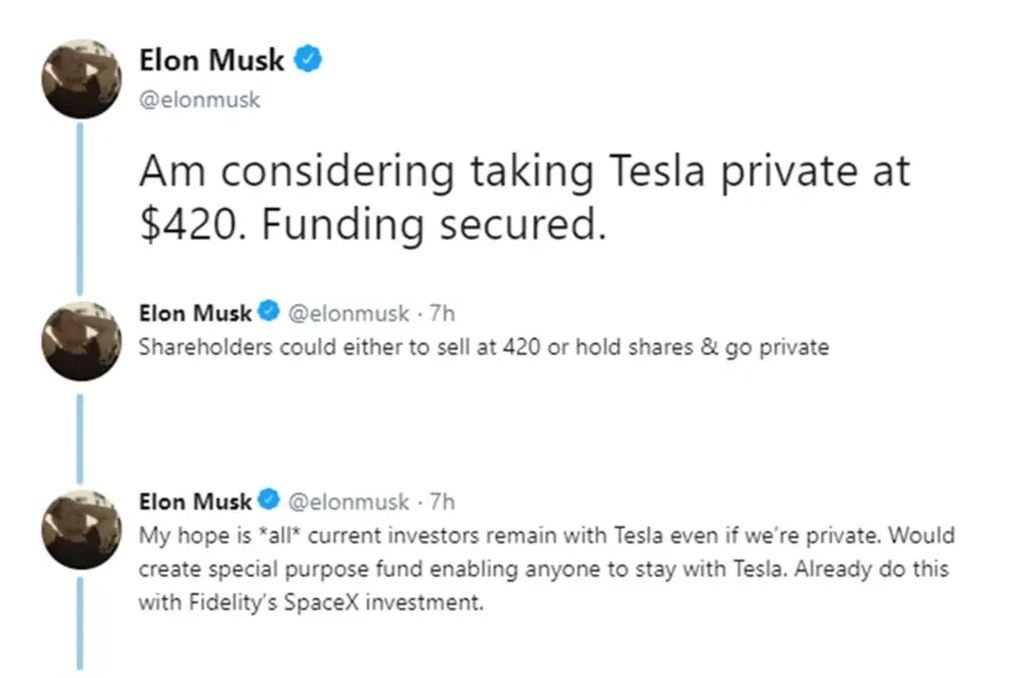
The Elon Musk SEC lawsuit began on August 7, 2018, Elon Musk posted a tweet that would cost him tens of millions of dollars, strip him of a board title, and keep regulators watching his social media activity for years. The tweet claimed he had "funding secured" to take Tesla private at $420 a share. It hadn't happened. What followed became one of the most closely watched corporate governance disputes of the last decade, and it still shapes how markets read Musk's public statements today.
This piece examines what actually happened, why the SEC acted, how the settlement was structured, and what it reveals about the gap between founder charisma and shareholder protection.
Who Is Elon Musk
Elon Musk is a South African-born entrepreneur and engineer best known as the chief executive of Tesla and the founder of SpaceX. He co-founded PayPal in the late 1990s before turning to electric vehicles and space transport, two industries widely seen at the time as too capital intensive and too risky for a single founder to dominate. Over two decades, he built a reputation as a hands-on, unfiltered communicator who uses his personal social media account, rather than traditional press channels, to announce product plans, company milestones, and personal opinions.
That same communication style is central to the SEC case at the heart of this article. Musk's habit of posting first and clarifying later has repeatedly put him at odds with securities regulators, who hold public company executives to a higher disclosure standard than an ordinary social media user.
About SpaceX and Tesla
Tesla is the publicly traded electric vehicle and energy company where Musk serves as chief executive officer. It is the company directly named in the SEC's 2018 complaint, and the one whose stock price moved sharply after the "funding secured" tweet and again after the settlement was approved.
SpaceX is Musk's privately held aerospace company, focused on rockets, satellite launches, and long-term space transportation. Unlike Tesla, SpaceX is not publicly traded, meaning there is no publicly listed SpaceX share price for investors to track. As a private company, it was not named in the SEC's securities fraud case because it does not have the same public disclosure obligations under U.S. securities law. Throughout the SEC dispute, Musk's leadership of SpaceX was never in question, as the legal action and governance changes applied specifically to his role at Tesla.
What the SEC Alleged
The Securities and Exchange Commission filed a case on Elon Musk SEC lawsuit in September 2018, six weeks after the tweet. Investigators moved fast: Tesla reportedly received a subpoena within a week of the post going live.
The core allegation was straightforward. Musk told the public he had financing lined up for a buyout at a specific price. Regulators said that wasn't true, and that the statement moved Tesla's stock price and triggered a trading halt. For a public company, that is not a minor slip. It is the kind of statement securities law treats as material, meaning it can reasonably influence an investor's decision to buy or sell.
Why This Case Mattered Beyond Tesla
Cases like this rarely stay contained to one company. They set a precedent for how casually executives can treat social media as a corporate disclosure channel. Before 2018, plenty of founders assumed Twitter was informal, personal, off the record in spirit if not in law. The Musk case closed that gap. Once a CEO's account functions as a de facto investor relations channel, the SEC treats it that way.
The Settlement Terms
Musk and the SEC reached a deal in late September 2018, and a federal judge approved it that October. The terms included:
A $20 million civil penalty paid by Musk personally
A separate $20 million penalty paid by Tesla
Musk stepping down as Tesla's board chairman for at least three years
Prior review of certain Musk tweets touching on Tesla by a company attorney, a provision that became known publicly as the "Twitter sitter" clause
No admission or denial of wrongdoing by Musk
Notably, Musk kept his job as CEO. The SEC's action targeted governance and disclosure controls, not his operational leadership. That distinction mattered enormously for Tesla's stock, which rose after the settlement was confirmed, since it removed uncertainty around Musk's role at the company.
Musk's Long Fight to Undo the Deal
Musk never fully accepted the arrangement, even after signing it. He repeatedly said in public that he did not respect the SEC, and he spent years trying to get out of the tweet-review requirement.
In 2019, Musk and the SEC agreed to a revised consent decree after a dispute over a tweet about Tesla's production numbers
In 2023, the Second US Circuit Court of Appeals rejected his argument that the oversight clause amounted to unconstitutional prior restraint on his speech
Later that year, Musk asked the Supreme Court to intervene, and that effort also failed
The appeals court noted the SEC had only opened three inquiries into Musk's tweets since 2018, undercutting his claim of harassment. The panel's view was simple: Musk agreed to the oversight voluntarily rather than litigate the original fraud charge, and he does not get to walk that choice back later because circumstances changed.
A Second SEC Case Followed a Similar Pattern
The "funding secured" saga was not Musk's only run-in with the agency. In 2025, the SEC sued him separately over how long he waited to disclose his early stake purchases in Twitter before his 2022 buyout, arguing the delay let him buy shares at prices that did not yet reflect his intentions. That case settled in 2026 for a $1.5 million penalty, a fraction of the roughly $150 million the SEC said he saved through the delay. Musk's attorney characterized it as a minor fine for a late filing rather than a substantive admission.
Taken together, the two cases show a consistent theme. Musk treats disclosure obligations as negotiable friction rather than fixed rules, and regulators keep responding with penalties that are large in headline terms but small relative to his net worth.
What This Means for Institutional Trust
From a reputation standpoint, the outcome is more nuanced than "Musk won" or "Musk lost." He kept operational control of Tesla and SpaceX throughout. Shareholders largely stayed with him. But the ongoing oversight requirement is a permanent asterisk on how his communications are treated by markets, journalists, and regulators.
A few patterns are worth noting for anyone studying executive crisis response:
Rapid regulatory action followed a market-moving statement, not a slow bureaucratic process
The settlement separated leadership continuity from governance discipline, letting Musk stay CEO while adding a compliance check
Public defiance after a settlement did not reopen the legal terms, but it did keep the story in the news for years
A second, separate disclosure case years later suggests the underlying behavior pattern did not fully change
For companies built heavily around a single founder's public voice, this case is a live example of how fast a single unverified claim can convert into years of legal exposure and reputational scrutiny.
How Musk Overcame the Fallout
Most executives facing a securities fraud complaint, a $20 million personal fine, and years of appeals would see their standing with investors erode. Musk's did not, at least not in a lasting way. A few factors explain how he came through this period with his leadership intact.
He Separated the Penalty From the Product
Musk never let the legal dispute slow Tesla's operational output. Vehicle production, delivery numbers, and new model launches continued on schedule through the settlement and the appeals that followed. Investors tend to forgive governance controversies faster when the underlying business keeps performing, and Tesla's growth through this period gave shareholders a reason to look past the SEC dispute.
Elon Musk Kept the CEO Title
Because the settlement removed him only as chairman, not as chief executive, Musk retained day-to-day control over Tesla's direction. This was arguably the single most important factor in his recovery. The market reacts far more sharply to the loss of a founder-CEO than to a compliance clause buried in a legal filing.
Elon Turned Defiance Into Part of His Brand
Rather than distancing himself from the controversy, Musk leaned into it publicly, repeatedly stating he disagreed with the SEC's authority over his speech. For most executives, that kind of open friction with a regulator would be reputationally costly. For Musk, it reinforced an image many of his supporters already associated with him: an outsider willing to challenge institutions. Whether or not that framing is accurate, it functioned as a shield against reputational damage in the eyes of a large part of his audience.
Elon Diversified Where His Reputation Was Built
Musk's public identity was never tied to Tesla alone. SpaceX's launch successes, the Twitter and later X acquisition, and his growing role in other ventures gave him multiple platforms of credibility running at the same time. A setback tied to one company's disclosure practices carried less weight against a founder whose reputation was spread across several high-profile projects.
Elon Treated Each New Regulatory Action as a Repeatable Pattern
By the time the second SEC case arrived in 2025 over Twitter stock disclosures, Musk and his legal team already had a template: settle without admitting wrongdoing, pay a penalty that is large in absolute terms but small relative to his net worth, and move on. That consistency, while costly, avoided prolonged uncertainty of the kind that damages investor confidence more than a fine does.
The Net Effect on His Reputation
None of this means Musk emerged unscathed. The tweet-review requirement is still active, the appeals record shows a founder who tested the limits of a regulator's patience and lost, and a second, separate SEC case years later suggests the underlying disclosure habits did not fully change. But his core asset, the ability to keep leading Tesla and SpaceX with strong investor and customer support, remained intact. That distinction, between reputational cost and operational survival, is the clearest lesson this case offers.
Conclusion
The "funding secured" tweet remains a reference point in securities law and executive communication training precisely because it shows how quickly informal speech becomes formal liability once a company is public. Musk retained his leadership roles at Tesla and SpaceX, and the business consequences were smaller than the headlines initially suggested. But the legal oversight tied to that single post has outlasted the news cycle by years, and a second SEC case in 2025 shows regulators remain attentive to how Musk discloses market-moving information. For investors and communications professionals alike, the episode is a case study in how one unchecked claim can shape institutional trust long after the initial controversy fades from the headlines.