

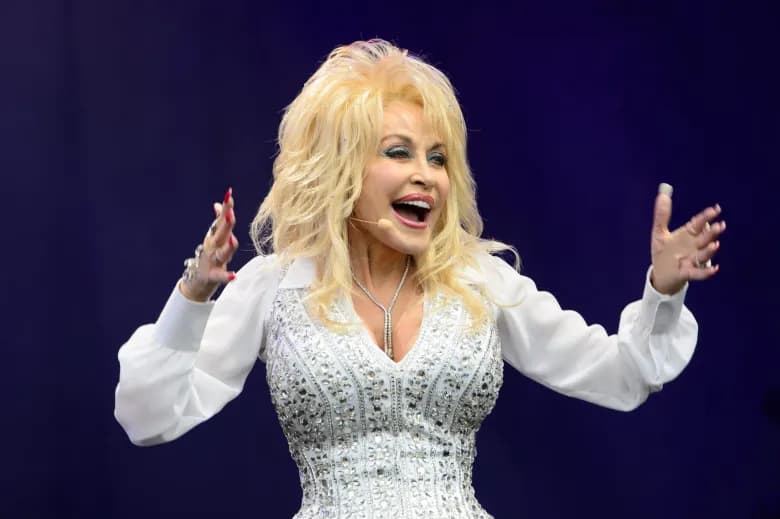
Dolly Parton lawsuits span her entire career. Porter Wagoner sued her for $3 million in 1979 over her exit from his show, settled for nearly $1 million. In 1985, songwriters accused her of copying "9 to 5," a claim a jury rejected. And Dollywood has faced repeated injury lawsuits from visitors over the years. Together, these cases show how often Parton had to fight to protect the name and empire she built.
Dolly Parton built one of the most recognized names in American entertainment across nearly six decades, and her fame did not shield her from the courtroom. As tributes continue after news that Dolly Parton died this week, it is worth looking back at the legal disputes that shaped her career, tested her business empire, and, in some cases, nearly cost her everything she had earned.
Dolly Parton passed away on August 25 2026 at the age of 80. Her publicist confirmed that the Dolly Parton cause of death was cancer. The publicist said it was an illness and that Dolly Parton was surrounded by her family at a Nashville cancer center when she died. Her nephew, Bryan Seaver shared the news about Dolly Parton, with the world.
But long before the tributes, Parton faced three legal battles that defined different chapters of her career: a bitter breakup lawsuit with her early mentor, a copyright fight over one of her signature songs, and a string of injury claims tied to the theme park that carries her name.
A Career That Spanned Six Decades
Before any lawsuit reached a courtroom, Parton had already built one of the most durable careers in American entertainment. Understanding that career explains why the legal fights carried so much weight.
Early Years and Breakthrough
Parton was born January 19 1946 in Sevier County, Tennessee one of twelve children raised in a one-room cabin. I found it striking that Parton began performing on radio and television as a child and then Parton moved to Nashville the day after graduating high school in 1964.
Parton’s national break came in 1967, when Parton joined The Porter Wagoner Show as its featured vocalist. The exposure turned Parton into a name, in country music and it set up the partnership that would later end in a lawsuit.
Solo Stardom
Parton went solo in 1974, and the following decade became the peak of her recording career. Highlights include:
"Jolene" and "I Will Always Love You," both released in 1973 and later recognized among the most influential songs in country music history.
"9 to 5," the 1980 single tied to her film debut, which became her first solo number-one pop hit.
Multiple Grammy Awards, Country Music Association Awards, and an eventual induction into the Country Music Hall of Fame in 1999.
Film, Business, and Philanthropy
Dolly Parton expanded beyond music into acting starting with 9 to 5 in 1980 and continuing through films such as The Little Whorehouse in Texas and Steel Magnolias.
She also built a business empire around her name, notably Dollywood, which opened in 1986 and grew into one of Tennessee's largest tourist attractions. Her philanthropic work including the Imagination Library book donation program, distributed over 100 million free books to children worldwide.
In 2022, Dolly Parton was inducted into the Rock and Roll Hall of Fame. She followed that honor with the surprise release of a rock album, Rockstar which debuted with the strongest opening sales week of her career.
Her Legal Battles Through the Decades
The Porter Wagoner Lawsuit That Reshaped Her Career
Long before Dolly Parton became a solo star she spent seven years as the main female singer on The Porter Wagoner Show. Wagoner gave Dolly Parton a stage starting in 1967 and the two of them made many hit songs together as a duo.
When Dolly Parton left the show in 1974 to try being a solo singer things did not end in a way. In 1979 Wagoner filed a Porter Wagoner lawsuit against Dolly Parton. He wanted, about $3 million because he said Dolly Parton broke a contract from her jobs.
Key details of the case include:
Wagoner argued that he helped build Parton into a star. Because of this Wagoner felt he was owed a percentage of the money Parton made.
Parton later wrote that she could have probably won the case in court. However Parton chose to settle the matter because Parton did not want to put her husband and her family through a legal fight.
The dispute was settled out of court for $1 million. Parton said that the $1 million took everything Parton owned at that time.
Parton later said that this fallout helped inspire the hit song "I Will Always Love You." Parton wrote the song while Parton was dealing with the end of the working relationship between Parton and Wagoner.
The two people eventually became friends again personally. So the money loss from the lawsuit stayed with Parton for many years. Parton often spoke about Wagoner with gratitude after the legal battle. Parton called Wagoner the person who gave Parton a start, in the music industry.
The "9 to 5" Copyright Lawsuit
Dolly Parton made her movie debut in the 1980 comedy 9 to 5. That movie had a theme song that became one of the hits for Dolly Parton and turned into a real anthem for working women. However that huge success led to a fight that no one saw coming five years later.
In 1985 two songwriters named Neil and Jan Goldberg, who used the names Gandharva and Eternity filed a $1 million copyright lawsuit against Dolly Parton over the song "9 to 5". The songwriters claimed that Dolly Parton had copied the melody from their 1978 song "Money World". They even said the song reached Dolly Parton through her co-star and producer Jane Fonda.
The trial went on for two weeks at a federal court in Los Angeles. Dolly Parton went to testify in her defense. At one point Dolly Parton even brought her guitar to the stand to show everyone how different the two songs actually were. She said the accusation was degrading. On Dolly Parton described the whole thing as one of the most painful times in her career because the lawsuit made people doubt her skill as a songwriter.
The jury sided with Dolly Parton after talking for a while. The jury decided there was no similarity between the two songs. This case is still known as one of the famous music plagiarism trials, from that time. Dolly Parton even talked about the lawsuit years later to show how easy it is for songwriters to be accused of copying a song by accident.
Dollywood Lawsuits Over the Years
Parton's Tennessee theme park, Dollywood, has faced a steady stream of personal injury claims since it expanded into a major regional attraction. Court records and local news coverage document several notable Dollywood lawsuits, including:
A 2013 case involving a visitor who suffered a serious head injury after falling from the Waltzing Swinger ride during icy conditions, with the lawsuit alleging inadequate safety measures.
A 2018 suit seeking $2 million after a woman said she suffered spinal injuries on the RiverRush Water Coaster at Dollywood's Splash Country water park.
A 2018 claim from a visitor who fractured her wrist exiting the Rockin' Roadway ride, citing a lack of safety devices at the exit point.
A 2021 lawsuit alleging inadequate warnings led to injuries on the Mountain Scream waterslide.
A 2025 workplace safety citation, after an employee was injured while servicing a ride lift, resulting in a fine from Tennessee's occupational safety regulator.
Most of these cases named Herschend Family Entertainment Corp and Dolly Parton Productions as co-defendants, reflecting the park's joint ownership structure. Dollywood has generally declined to comment on pending litigation, citing standard legal practice.
Beyond ride safety, the park has also dealt with intellectual property disputes tied to its seasonal shows, including a licensing dispute over the use of a well-known holiday song in one of its productions.
Why the Legal History Still Matters
None of these lawsuits define Parton's legacy on their own. Her catalog of Dolly Parton songs, from "Jolene" to "9 to 5" to "I Will Always Love You," continues to shape country music and popular culture worldwide. But the legal record shows a performer who had to fight, more than once, to protect her name, her royalties, and the business she built around it.
For a public figure whose brand rested so heavily on warmth and generosity, these disputes reveal a sharper, more guarded side, one that insisted on accountability from partners, accusers, and even her own theme park's operators.
Conclusion
Dolly Parton's death closes the chapter on one of the most consequential careers in American music, but her legal history adds a layer often missing from the tributes. From a costly split with her early mentor to a public copyright trial and years of injury claims at her theme park, Parton's business empire was tested repeatedly in court. She generally emerged from those fights with her reputation, and her songwriting credit, intact, a fact that shaped how she was remembered this week as fans and colleagues paid respect to her music, her generosity, and her staying power.