

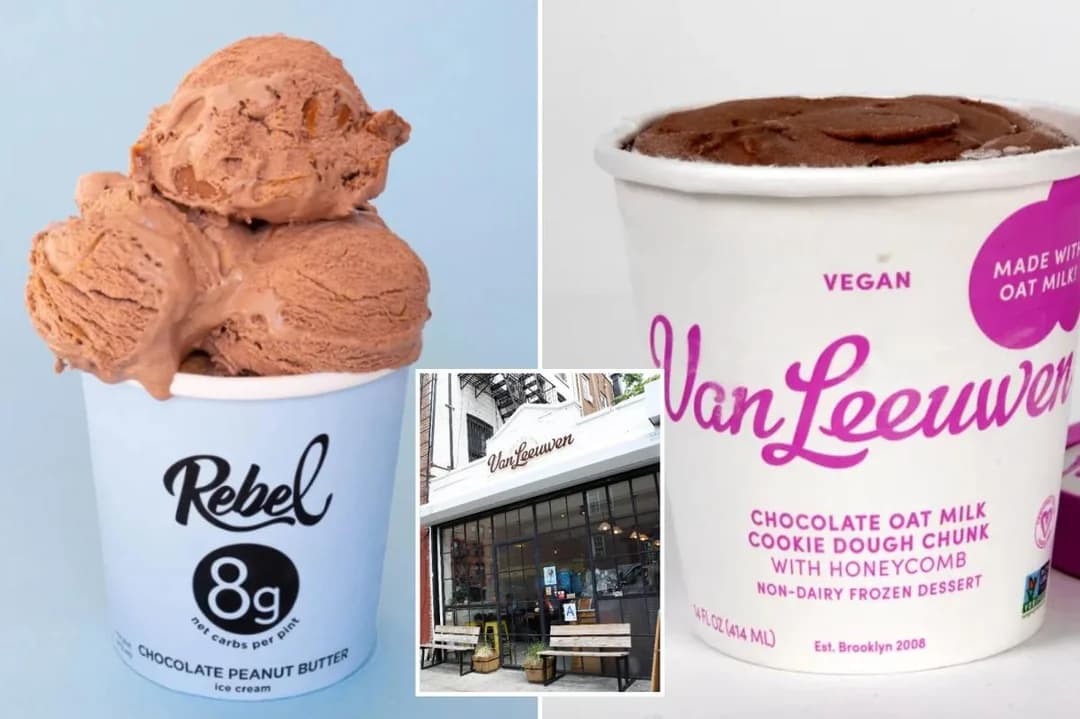
Corporate misconduct often begins not in smoke-filled boardrooms, but in plain sight on crowded grocery shelves, a reality underscored by the high-profile rebel creamery lawsuit. For over a decade, my reporting has focused on accountability, structural oversight, and the legal consequences when businesses cross ethical and legal lines.
A landmark federal court ruling delivered a stark reminder that copying a competitor's visual identity is not merely an aggressive marketing tactic. It is an expensive form of intellectual property theft. The U.S. District Court for the Eastern District of New York ordered Rebel Creamery to disgorge nearly $23.8 million in profits after finding that the brand intentionally copied the distinct trade dress of a major rival.
Understanding Who Rebel Creamery Is
Founded in late 2017 following a successful crowdfunding campaign, Rebel Creamery entered the frozen dessert market with a very specific value proposition. The challenger brand positioned itself as a disruptor in the health-conscious and low-carb space, catering directly to consumers following ketogenic and sugar-free diets. By utilizing alternative sweeteners and high-fat dairy bases, the company carved out a niche for individuals seeking sweet indulgences without the glycemic impact of traditional sugar.
However, the brand's rapid scaling strategy relied heavily on visual familiarity. Rather than investing in an entirely independent design language to build its presence on national grocery shelves, the company adopted a minimalist aesthetic featuring pastel tones and script lettering that closely mirrored established market leaders. This shortcut eventually sparked high-stakes federal litigation, proving that a promising product concept can be severely undermined by aggressive and legally actionable imitation.
Anatomy of a Trade Dress Violation
The legal battle spanning five years centered on a deceptively simple question: How far can a challenger brand go before its product packaging crosses the line into deceptive mimicry? Van Leeuwen Ice Cream filed a federal lawsuit alleging that rebel creamery systematically adopted core aesthetic elements of its wholesale pint packaging.
Federal courts protect trade dress under the Lanham Act when a combination of visual features creates a distinct commercial impression that consumers associate with a specific source.
Van Leeuwen established that its pint design relied on a careful coordination of features:
- Monochromatic cardboard cartons paired with matching colored lids
- A soft, muted pastel color palette
- Oversized, black handwritten script lettering
- A minimalist layout focusing heavily on product descriptors
During the bench trial, court documents revealed that the probability of independent creation was infinitesimal. Testimony showed that a major retail buyer explicitly warned rebel creamery leadership prior to its national launch that the packaging looked identical to existing competitor lines. Management chose to ignore the warning, cementing the court's finding of willful infringement.
The Defense Strategy and Financial Disgorgement
When confronted with allegations of corporate misconduct, defense strategies often rely on separating product utility from aesthetic presentation. Attorneys for rebel creamery lawsuit defense argued that consumer purchasing decisions were driven by specialized formulation rather than outer wrapping.
The brand built its commercial identity around specific rebel creamery nutrition facts, marketing its products as low-carb, high-fat, and keto-friendly alternatives to traditional desserts. Defense experts claimed that even if design similarities existed, profits were derived from dietary preferences rather than trade dress confusion.
Judge Eric R. Komitee rejected the broader defense of independent creation while adjusting financial penalties to account for functional appeal. The court acknowledged that the brand's low-sugar positioning contributed to consumer demand, leading to a modest downward adjustment of total gross revenues. However, the final judgment required the company to surrender $23.79 million in net profits tied directly to the infringing sales, alongside a permanent injunction forcing a total packaging overhaul.
Conclusion
The legal reckoning faced by rebel creamery serves as an essential warning for consumer product startups navigating competitive retail landscapes. Intellectual property rights extend far beyond logos and brand names, wrapping the entire consumer experience into legally protected trade dress. When companies ignore early warnings and fail to document authentic creative processes, the cost of imitation can ultimately dismantle years of financial growth.