

Oil crosses $100 a barrel and West Texas Intermediate futures surged 24.6% to $113.30 as the US-Israeli campaign against Iran choked the Strait of Hormuz. Prime Minister Keir Starmer acknowledged a material risk to households and businesses, while Chancellor Reeves joined an emergency G7 session to weigh a coordinated strategic reserve release.
WHAT HAPPENED: THE $100 THRESHOLD BROKEN
Crude oil markets shattered a critical psychological barrier on Monday 9 March 2026, with West Texas Intermediate futures climbing 24.6 percent to $113.30 a barrel and international benchmark Brent crude rising 23.4 percent to $114.38. That is the first time oil has traded above $100 since mid-2022, when Russia's full-scale invasion of Ukraine convulsed global energy markets.
The proximate trigger was the US-Israeli military campaign against Iran that began on 28 February 2026. Strikes on oil depots in Tehran and a petroleum transfer terminal set in motion a cascade of supply disruptions that analysts had long flagged as the most dangerous single-point risk in the global energy system: the closure of the Strait of Hormuz.
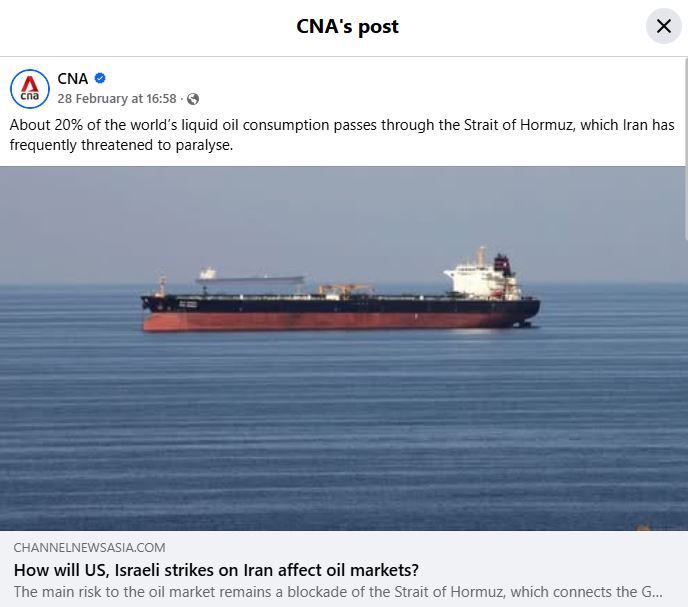
The Strait of Hormuz carries roughly 20 percent of the world's seaborne oil. When Iran moved to restrict tanker traffic, the second-, third-, and fifth-largest OPEC producers — Iraq, the UAE, and Kuwait — found themselves unable to export. Iraq's three main southern oilfields, which were producing 4.3 million barrels per day before the war, collapsed to 1.3 million bpd, a reduction of 70 percent, according to three industry officials who spoke to Reuters.
WTI crude recorded its largest weekly percentage gain in futures trading history in the week ending 7 March, surpassing records dating back to 1983. The cumulative surge since the start of the war exceeded 25 percent — a price shock comparable in speed, if not yet magnitude, to the 1973 Arab oil embargo and the 1990 Gulf War spike.
WHO IS AFFECTED: THE DISTRIBUTION OF ECONOMIC PAIN
United Kingdom: A Structurally Exposed Economy
Britain enters this energy shock in a weaker position than in 2022. The National Institute of Economic and Social Research modelled two scenarios. In a transitory shock of one quarter, UK CPI inflation rises approximately 0.3 percentage points. In a persistent shock sustained across a full year, UK inflation rises 0.7 percentage points in 2026 and 0.5 percentage points in 2027, with the Bank of England forced to raise rates roughly 0.8 percentage points above its baseline path. Under that scenario, UK GDP contracts 0.2 percent in 2026 and 0.3 percent in 2027.
UK gas storage reserves stood below 30 percent capacity when the conflict began, replicating the vulnerability that amplified the 2022 Ukraine shock into an 11 percent inflation peak. At that time, the government spent £78.2 billion on energy subsidies and cost-of-living support payments. Today's fiscal position leaves far less room for a comparable response.
Global Emerging Markets: The Overlooked Victims
More than 80 percent of global trade travels by sea. The Strait disruption directly raises freight costs and delays deliveries for economies with no geographic alternative routing. Egypt's President el-Sisi declared his economy to be in a near-emergency state. Djibouti's Finance Minister warned of severe consequences for developing nations and small states dependent on maritime trade routes. Iran exports roughly 1.6 million barrels of oil per day, mostly to China. Any sustained interruption forces Beijing to seek replacement supply from an already constrained market, adding further upward pressure to benchmark prices.
United States: Political Vulnerability and Consumer Pressure
US consumers faced an average pump price of $3.45 per gallon on 8 March, up 47 cents from a week earlier, according to AAA. Diesel reached $4.60 per gallon, up 83 cents week-on-week. GasBuddy placed the probability of prices topping $4.00 per gallon within one month at 80 percent. President Trump sought to minimise concern, describing the oil price rise as a very small price to pay for destroying Iran's nuclear threat. Markets have not yet been persuaded.
WHY THE STRAIT OF HORMUZ IS THE FULCRUM OF THIS CRISIS
The Strait of Hormuz, a 21-mile-wide waterway between Iran and Oman, is the single most strategically significant energy chokepoint on the planet. Saudi Arabia, the UAE, Iraq, and Kuwait suspended shipments of as much as 140 million barrels to refiners worldwide as export routes were blocked. With storage reaching capacity limits, Gulf state oilfields began to shut in production. Kuwait announced precautionary cuts to both production and refinery output. The UAE said it was carefully managing offshore production levels.
Qatari Energy Minister Saad al-Kaabi warned that all regional producers could soon be forced to halt production entirely, with prices potentially reaching $150 a barrel. Analyst Rory Johnston stated crude would reach $200 unless Strait traffic resumed, describing this not as hyperbole but as the arithmetic of supply and storage constraints.
WHAT STARMER IS DOING: THE UK GOVERNMENT'S RESPONSE
Prime Minister Keir Starmer acknowledged the gravity of the situation directly on Monday morning, saying people were rightly worried about their bills, jobs, and communities, and pledged that supporting working people with the cost of living was always top of his mind. He confirmed the government was working with international partners to assess what more could be done collectively to reduce the impact on UK households and businesses.
Starmer stated plainly that the longer the conflict continued, the more likely was a material impact on the economy, on household bills, and on businesses of every size. He described the government's role as getting ahead of that risk and working with others to mitigate it.
Chancellor Rachel Reeves attended an emergency virtual G7 Finance Ministers meeting, where a coordinated release of strategic oil reserves through the International Energy Agency was discussed. A joint reserve release was last activated during the 2022 Ukraine crisis and the 2011 Libyan civil war. The Bank of England, which had been expected to cut rates at its March meeting, is now unlikely to do so.
HOW LONG COULD THIS LAST? SCENARIOS AND PROJECTIONS
Energy markets are currently pricing in a disruption of one to two weeks based on the implied forward curve. That assumption is fragile. US Energy Secretary Chris Wright said in a worst-case scenario ships would be back transiting the Strait in a matter of weeks, not months. The Trump administration announced plans to provide insurance to oil tankers attempting to pass through the waterway after commercial maritime insurers withdrew coverage for the region.
Chatham House modelled the divergence clearly. If oil stabilised at $70 to $80 and gas prices remained near current levels, inflation in Europe and Asia would rise only around 0.5 percentage points above pre-conflict forecasts in 2026. If prices climbed toward and remained near $100 throughout the year, inflation could be roughly one percentage point higher and GDP growth 0.25 to 0.4 percentage points lower across advanced economies.
The IMF's standing estimate holds that every sustained 10 percent increase in oil prices reduces global growth by 0.15 percentage points and raises inflation by 0.4 percentage points. With prices already up more than 25 percent since the war began, the arithmetic of a prolonged conflict is sobering.
The 2022 Parallel and Why This Time Is Different
The last time oil crossed $100 was in the weeks following Russia's invasion of Ukraine in February 2022. That shock was principally a European gas crisis. This crisis differs in three structural respects: it disrupts a chokepoint affecting the entire global oil economy rather than one region's gas network; it has emerged when UK and European gas storage is substantially below seasonal norms; and it coincides with a UK macroeconomic backdrop where growth is barely positive, unemployment is at a five-year high, and fiscal headroom for emergency support spending is materially narrower than in 2022.