


The Fertilizer Chokepoint: The Iran-Israel-US war has shuttered one of the planet's most critical trade arteries. The Strait of Hormuz, through which a quarter of the world's fertilizer supply transits, has been at a virtual standstill since February 28. The result is a slow-moving food price crisis that will hit the most vulnerable populations hardest, and may prove more economically damaging than the war's energy disruptions alone.
Why the Strait of Hormuz Is the World's Fertilizer Artery
The Strait of Hormuz is not merely an oil corridor. It is the single most concentrated chokepoint for global fertilizer trade, and its near-complete closure since February 28 has triggered a supply chain shock with no modern precedent outside wartime. According to the Center for Strategic and International Studies, the strait accounts for 20 to 30 percent of all global fertilizer exports, including 35 percent of global urea exports.
The Gulf states are among the world's leading producers of nitrogen fertilizers, which are derived from natural gas. Saudi Arabia, Qatar, and the UAE have collectively become indispensable suppliers to agricultural markets across South Asia, Sub-Saharan Africa, South America, and Southeast Asia. This dependency deepened after Russia's 2022 invasion of Ukraine disrupted European and Black Sea fertilizer flows, forcing buyers to reorient their supply chains toward Gulf producers.
WFP Deputy Executive Director Carl Skau confirmed the agency's shipping costs have already risen 18 percent, with thousands of trucks now operating on significantly more expensive fuel. The direct consequence is that WFP can purchase less food per dollar and has been forced to cut food rations in Sudan while reaching only one in four acutely malnourished children in Afghanistan.
The Cascading Economics of a Fertilizer Supply Shock
Urea Prices and the Northern Hemisphere Planting Window
The timing of the Strait's closure could not be worse for farmers in the Northern Hemisphere. Spring planting season, which represents the highest-volume fertilizer import window of the year, is now underway. Vessels traveling from the Persian Gulf to the US Gulf Coast typically take 30 days in transit, meaning supply disruptions that began on February 28 are landing directly in the middle of peak planting demand.
According to CSIS, urea prices at the New Orleans import hub jumped 32 percent in the first week of war, from 516 dollars per metric ton on February 27 to 683 dollars by March 5. By March 9, US urea prices had risen 77 percent from mid-December 2025 levels. In December 2025, one ton of urea cost US farmers the equivalent of 75 bushels of corn. By March 9, that ratio had deteriorated to 126 bushels per ton, representing a severe compression of farm-level margins.
The Council on Foreign Relations reports that in the Middle East itself, urea prices rose 19 percent within a single week of the conflict beginning, creating immediate fiscal pressure on agricultural sectors across the globe.
Second-Order Effects: Upstream Input Disruption
Carnegie Endowment for International Peace analysts highlight that the second-order effects of this supply chain rupture may prove equally damaging. Fertilizer producers in countries outside the Gulf depend on Gulf-origin inputs, including natural gas feedstocks for ammonia synthesis. With those inputs stranded behind the blockade, production capacity is being curtailed upstream as well.
This mirrors the dynamics observed during Russia's invasion of Ukraine in 2022, when transportation interruptions and trade restrictions on an already-limited fertilizer supply base caused prices to increase by approximately 50 percent. Analysts at Carnegie note that the current crisis may be more severe in structural terms, given the Gulf's greater share of global fertilizer production relative to Ukraine's.
Key upstream disruption channels include Gulf LNG feedstock for ammonia synthesis being stranded, phosphate exports from Saudi Arabia and Israel suspended, and Saudi Arabia's Red Sea oil pipeline having no fertilizer equivalent.
No Strategic Reserves, No Escort Policy
Unlike oil, where G7 nations maintain strategic petroleum reserves and release mechanisms, there is no equivalent stockpile infrastructure for fertilizer. Carnegie Endowment researchers note that G7 countries do not maintain strategic fertilizer reserves, and the political and commercial priority given to ensuring fertilizer shipments transit the strait is far lower than for oil.
The US Navy has received near-daily requests from commercial operators for convoy escort through the strait but has declined to provide them thus far. Fertilizer has less financial value per cargo than oil, meaning captains and insurers alike have strong economic incentives to prioritize oil over fertilizer even when partial transit becomes possible.
The Human Cost: Who Gets Hit Hardest
Sub-Saharan Africa Faces a Planting Season Crisis
The WFP has identified sub-Saharan Africa as the highest-risk region, as the continent enters its 2026 planting season precisely as fertilizer supply chains collapse. Many African nations have limited domestic fertilizer production capacity and few alternative suppliers capable of filling the gap at short notice. WFP representatives have specifically flagged Sudan, already WFP's largest single operation, and drought-stricken Somalia, where millions are already experiencing severe food insecurity.
45 Million People at Risk of Acute Hunger
WFP estimates that if the conflict persists, an additional 45 million people worldwide could be pushed into extreme hunger. This figure would push the total number of people experiencing extreme hunger to levels last seen in 2022 during the Ukraine war-triggered food crisis. WFP USA data shows some countries are already experiencing a 24 percent rise in extreme hunger indicators.
Import-dependent countries in Africa and Asia face the highest structural exposure. Extended shipping routes, port congestion driven by traffic rerouting away from the Gulf, and sharp increases in cargo insurance premiums are collectively jeopardizing WFP's ability to reach vulnerable populations efficiently.
Iran's Domestic Food Security in Freefall
Within Iran itself, CSIS data notes that over 3 million people have fled major cities, including Tehran, to seek safety in rural areas. Pre-existing economic pressures, including high food inflation and rapid currency depreciation, had already severely weakened the population's ability to cope with disruption before this conflict began. The combination of internal displacement and external supply chain disruption is creating a compounding humanitarian and food security crisis.
Market Signals and Policy Response
Global Grain Markets Under Pressure
The disruption to fertilizer supply chains is transmitting directly into forward pricing for grain and cereal crops. Reduced fertilizer application in the 2026 spring planting season in North America, Europe, and Asia will likely feed through into lower crop yields, with price effects emerging in the 2026 harvest cycle and intensifying in 2027.
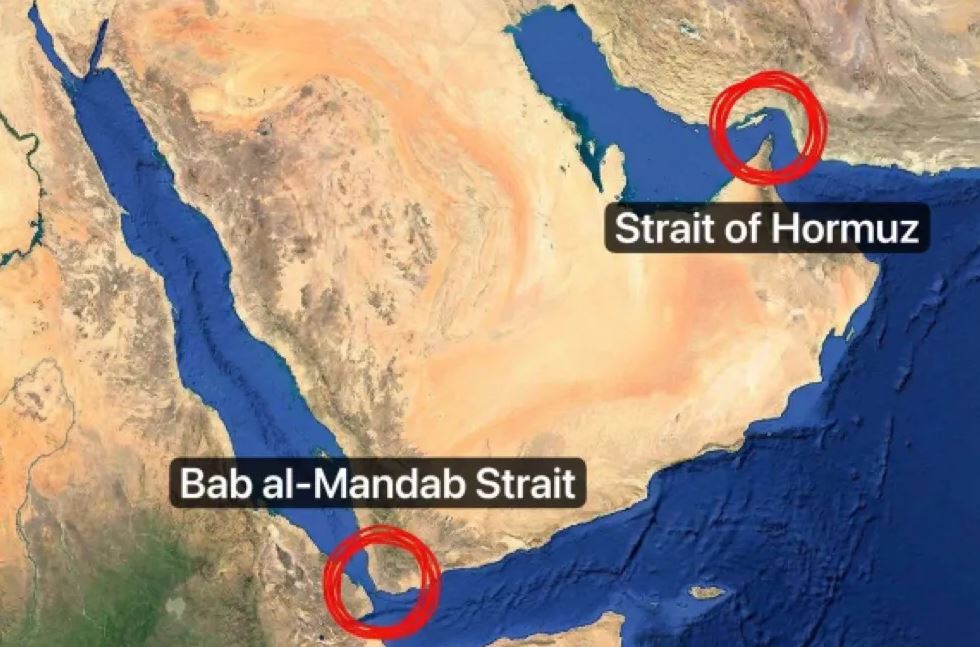
The WFP has warned explicitly that disruptions to the dual chokepoints of the Strait of Hormuz and the Red Sea's Bab-el-Mandeb could trigger another wave of global inflation. The WFP's own operational costs are already 18 percent above pre-war levels.
The Dual Chokepoint Problem
What distinguishes the current crisis from previous disruptions is the simultaneous compression of two of the world's most critical maritime corridors. The Strait of Hormuz faces direct targeting and vessel restrictions. Separately, risks and insurance costs on vessels transiting the Red Sea's Bab-el-Mandeb strait are causing delays and significant rerouting. The combination creates a dual chokepoint effect on global food supply chains with no obvious mitigation pathway in the near term.